Say It Right: Sidhe
How to say Sidhe — it is simply "shee," the Irish word for a fairy mound and the Otherworld folk who dwell there.
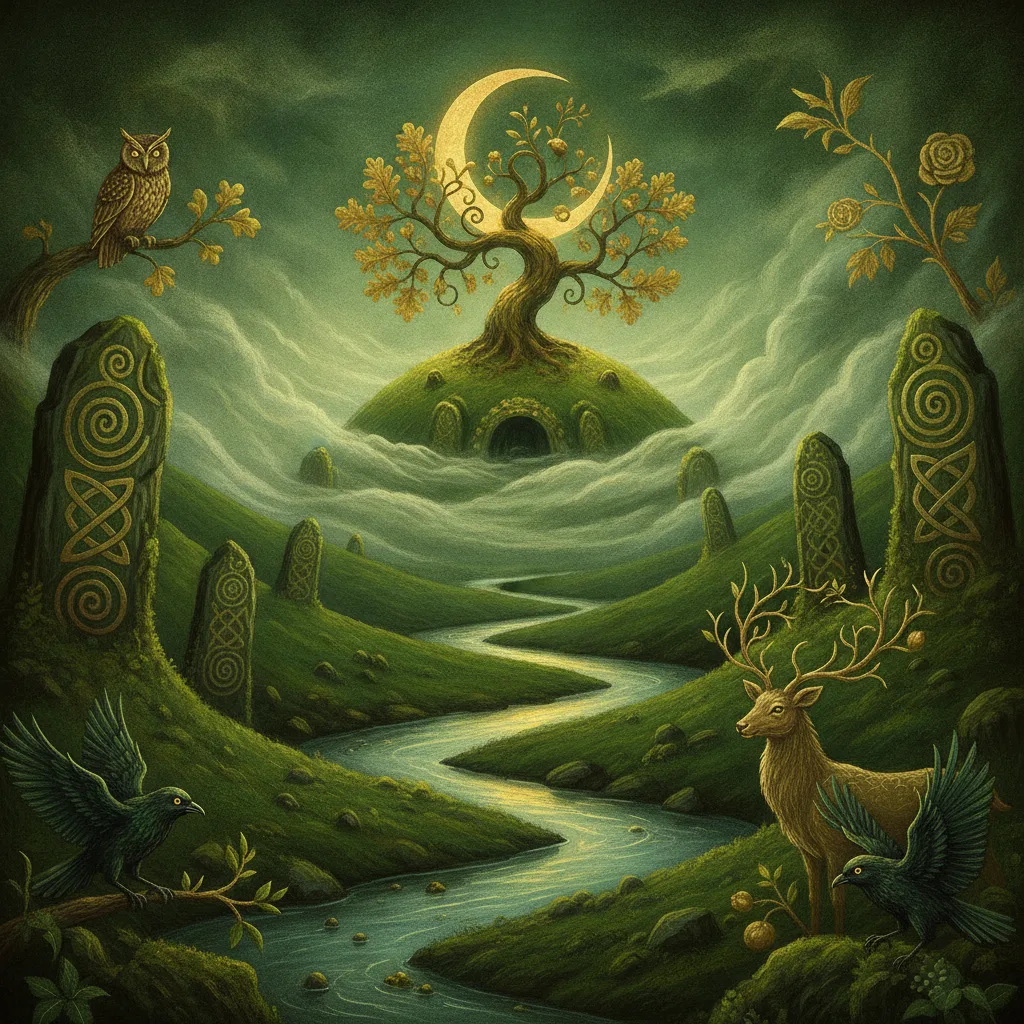
Sidhe is simply said 'shee,' one syllable rhyming with 'see'; the d and h together are silent. A síd (older sídh) is a fairy mound, and by extension the Otherworld and its people, the aos sí - the fairy folk of Irish tradition. Modern standardised Irish spells it sí, but the older 'sidhe' survives in words like bean sídhe.
- Sidhe is said simply 'shee,' one syllable rhyming with 'see.'
- The d and h are silent - not 'SID-hee,' 'side' or 'syth.'
- A síd is a fairy mound, and by extension the Otherworld and its fairy folk.
- Modern standardised Irish writes it 'sí'; both are the same word.
- It survives in compounds like bean sídhe (banshee) and aos sí; the folk are proud, not twee.
It looks like it should be tricky, and it is one of the most-mangled words in Irish folklore. Sidhe is simply said “shee” — one syllable, rhyming with “see.” The d and h together are silent; they are not pronounced “sid-hee,” “side,” or “syth.”
The word carries two linked meanings. Literally a síd (older spelling sídh) is a fairy mound — one of the ancient tumuli and hills said to be doorways to the Otherworld. From there it came to mean the Otherworld itself, and its inhabitants: the aos sí (“people of the mounds”) or daoine sídhe, the fairy folk who in Irish tradition are anything but the small winged sprites of Victorian imagination.
The spelling causes half the trouble. “Sidhe” is the older, pre-reform Irish form; modern standardised Irish writes it sí, which makes the “shee” sound far more obvious. Both are the same word. You will meet the older spelling constantly because it survives in famous compounds — most of all in bean sídhe, the banshee.
Common mispronunciations to sidestep: “SID-hee,” “SIGH-thee,” and “side.” If you can say the second half of “banshee,” you already have it. The safest rule of thumb: whenever you see -sidhe or sí in an Irish name, reach for “shee.”
Where it comes from: Irish sí / sídhe, from Old Irish síd, meaning a fairy mound and, by extension, otherworldly peace — the same root that names the fairy folk of Gaelic tradition.
A memory trick: think of the word “banshee.” The “-shee” you already say without effort is exactly the sound of sidhe. Lock that in and you will never reach for “sid-hee” again.
You will meet the word constantly once you start looking. It hides inside place-names and personal names all over Ireland, and it anchors a whole family of folklore terms — the aos sí, the daoine sídhe, the bean sídhe (banshee), and the “sídhe wind” or fairy blast once blamed for sudden gusts. In older texts the mounds themselves are called síde, and the great neolithic passage-tombs such as Newgrange were understood as their gateways.
It is worth pausing on how much the word carries. To call something of the sídhe is not to call it small or twee; in the tradition these are powerful, proud, sometimes dangerous beings — the older gods of Ireland withdrawn into the hills. Saying the word correctly is a small act of respect toward a tradition that took them very seriously indeed.
