Building an altar or seasonal shelf: a styling guide
A practical styling guide to an altar or seasonal shelf: composition, natural materials, caring for the display, and rotating it through the year.
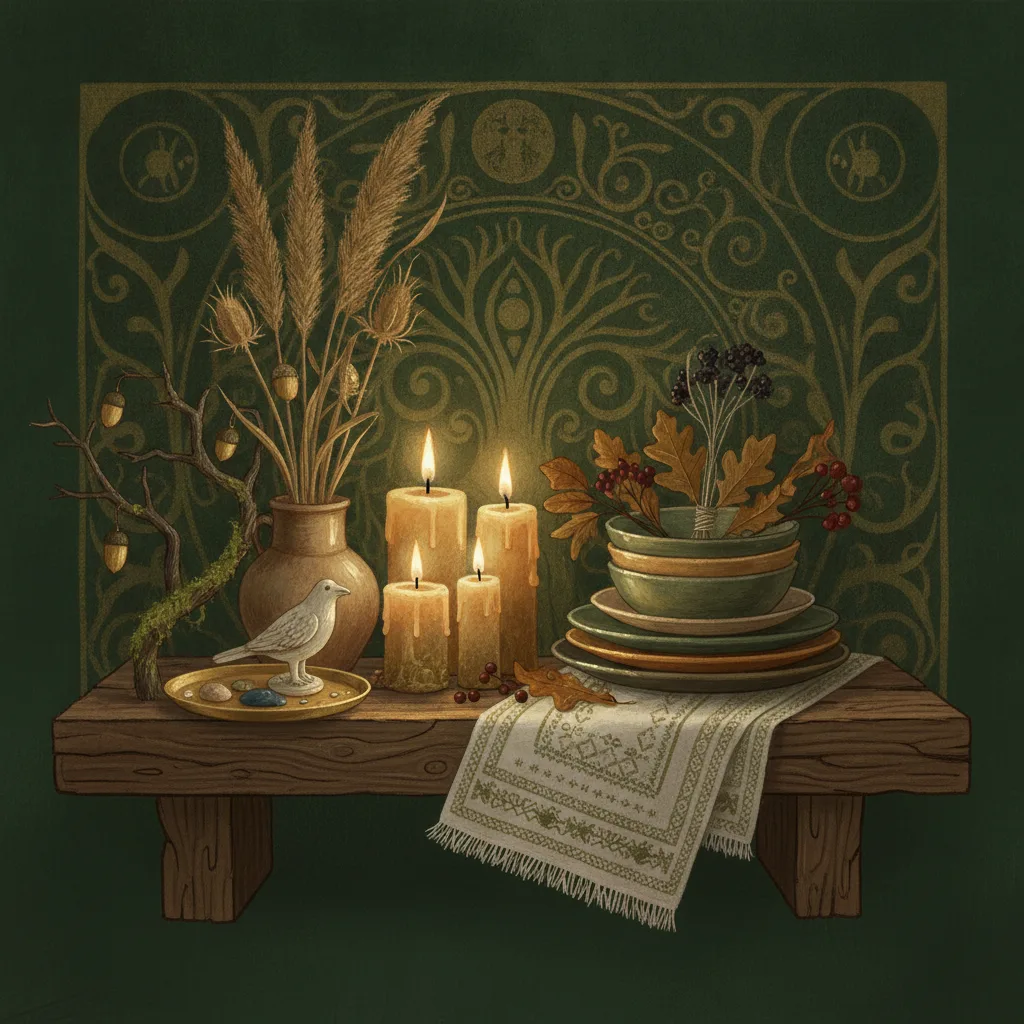
Style a seasonal shelf by framing it on a defined edge in good light, then composing with odd numbers, varied heights, a triangle, one off-centre anchor and negative space. Build from natural materials that age well, limit the palette to three or four seasonal tones, and rotate perishable material every six to eight weeks. Edit: three considered things beat fifteen.
- Frame the arrangement on a defined edge in good light.
- Use odd numbers, varied heights, a triangle and one anchor.
- Leave negative space so objects can breathe.
- Build from natural materials; limit to three or four tones.
- Rotate perishables every six to eight weeks; edit seasonally.
A seasonal shelf — sometimes called an altar, a nature table or simply “the mantel” — is one of the oldest impulses in domestic life: a small, deliberate arrangement of meaningful things, refreshed as the year turns. People keep them for all sorts of reasons, spiritual and secular, and this guide takes no view on yours. What it offers is the practical craft of composition: how to make a seasonal shelf that looks considered rather than cluttered, using natural materials, and how to keep it alive by rotating it through the year. Treat everything here as styling advice, not instruction on belief or practice.
Choose the surface first
Almost anything horizontal will do — a mantelpiece, a windowsill, a floating shelf, the top of a chest, a tray that can be moved. Two things matter more than what it is. First, a defined edge: a tray, a runner or a distinct shelf gives the arrangement a frame, and a frame is what separates “a display” from “some stuff on a surface.” Second, the light: a spot that catches morning or evening light will do half your styling for you, especially with candles, glass and anything with translucency.
If you can, avoid the busiest thoroughfares of the house for anything with open flame or delicate material, and think about the backdrop — a plain wall, a mirror, or a piece of dyed cloth pinned behind will hold the composition together.
The bones of good composition
Whatever objects you use, a few reliable principles make an arrangement read as intentional.
- Work in odd numbers and varied heights. Groups of three and five sit more easily than pairs and fours. Give yourself a tall element (a candlestick, a branch, a framed image), a medium mass (a bowl, a jar, a stack of books) and something low and grounding (a stone, a dish, a cluster of nuts).
- Build a triangle. Let your eye travel between three focal points arranged as a loose triangle rather than a straight line. It is the single most useful trick in still-life styling.
- Give it a centre of gravity. One clear anchor — often the tallest or most visually dense object, placed slightly off-centre — stops the arrangement drifting.
- Leave negative space. Empty surface is not wasted; it is what lets the objects breathe. If in doubt, remove a third of what you have put down.
- Layer front to back. Tallest at the back or to one side, shortest at the front, with a little overlap, so there is depth rather than a row.
Materials that age well
A shelf built from natural materials looks better over time and ties the arrangement to the season outdoors. Reliable building blocks:
- Wood and stone: a turned bowl, a slice of log, a smooth river pebble, a piece of driftwood. These are the grounding, low elements.
- Ceramics: unglazed or matte stoneware in earth tones reads calmer than anything glossy; a single well-made potter’s dish earns its place for years.
- Living and dried plants: a small potted fern or ivy for life; dried grasses, seedheads and branches for structure and to mark the season.
- Metal and glass: a forged iron candlestick, a brass dish, a clear glass vessel to catch light — small amounts of these lift an otherwise soft, matte grouping.
- Textile: a naturally dyed runner or a folded cloth to define the base and introduce colour.
- Beeswax candles for warmth and, when lit, a shifting focal point. Observe the usual fire safety: never unattended, clear of dried material.
A useful restraint is to limit your palette to three or four natural tones drawn from the current season, and to let texture rather than colour do the work.
Rotating through the year
The pleasure of a seasonal shelf is that it is never finished. Many people organise the year loosely around the eight points of the seasonal wheel, but you can just as easily follow the plain calendar or simply what is happening outside your window. The principle is the same: refresh the perishable material every six to eight weeks, keep the made objects, and let the palette follow the light.
- Deep winter: bare branch, evergreen sprigs, white and silver, candlelight, stones — a spare, restful arrangement for the dark.
- Early spring: the first bulbs, catkins, pale green, moss, eggs or seeds — signs of return, kept small and tentative.
- Late spring and early summer: fresh flowers, blossom, bright cloth, a fuller and more generous composition as the light grows.
- High summer: herbs, roses, sun-warm colours, shells or water-worn glass; the shelf at its most abundant.
- Early autumn: the first harvest — grasses, seedheads, apples, ambers and golds as the year tips over.
- Late autumn: the last gathering, russets and browns, nuts and bare twig, more candlelight as the dark returns, and — for those who keep it — remembrance of the ancestors.
Keep a small box for the between-times: the dried stems worth saving, the pebbles and shells, the candle stubs. Rotation then becomes a ten-minute pleasure rather than a project.
Caring for what you display
Natural materials repay a little maintenance. Dust is the main enemy of a shelf that should feel considered: a soft brush or a hairdryer on a cool setting clears dried stems and delicate seedheads without crushing them. Wipe stone and ceramics with a barely damp cloth; feed wooden bowls and boards occasionally with a food-safe oil to keep them from drying and cracking. Keep dried botanicals out of direct, prolonged sun, which fades them quickly, and away from damp, which invites mould. Trim spent candles’ wicks and clean wax drips before they set into a mess. None of this is onerous — five minutes when you refresh the perishable material — but it is the difference between a shelf that looks tended and one that slowly looks neglected.
Editing: the part everyone skips
The most common mistake is addition without subtraction. A shelf tended for a year quietly accumulates until it reads as clutter. Once a season, take everything off, clean the surface, and put back only what still earns its place — the objects you actually look at. Meaning does not require quantity; three considered things carry more of it than fifteen. A well-styled seasonal shelf is not a collection of everything you love. It is a small, changing portrait of where the year is now, and of what you want to keep in front of you while it passes.
Frequently asked questions
How do I style a seasonal shelf so it looks intentional?
Work in odd numbers and varied heights, arrange three focal points as a loose triangle, give the group one off-centre anchor, leave plenty of negative space, and layer from tall at the back to low at the front.
What materials work best for an altar or nature table?
Natural, tactile materials that age well: wood and stone as grounding elements, matte ceramics, dried and living plants for structure and life, small amounts of iron, brass or glass to catch light, and a naturally dyed cloth to define the base.
How often should I change a seasonal shelf?
Refresh the perishable material every six to eight weeks, following the season outside. Keep the made objects, rotate the plants, grasses and colours, and store savable stems and stones in a small box between times.
How do I care for natural materials on display?
Dust dried stems with a soft brush or cool hairdryer, wipe stone and ceramics with a barely damp cloth, oil wooden bowls occasionally, and keep dried botanicals out of direct sun and damp to prevent fading and mould.
How do I stop a shelf looking cluttered?
Edit ruthlessly once a season: clear the surface entirely and return only the objects you actually look at. Three considered things carry more meaning than fifteen.
