Myth & Folklore Irish & Scottish Gaelic (wider European belief)
Changelings: the belief, its social history, and its real human harm
The changeling — a fairy left in place of a stolen human — was a folk explanation for illness and disability whose "cures" did real harm, as the 1895 killing of Bridget Cleary shows.
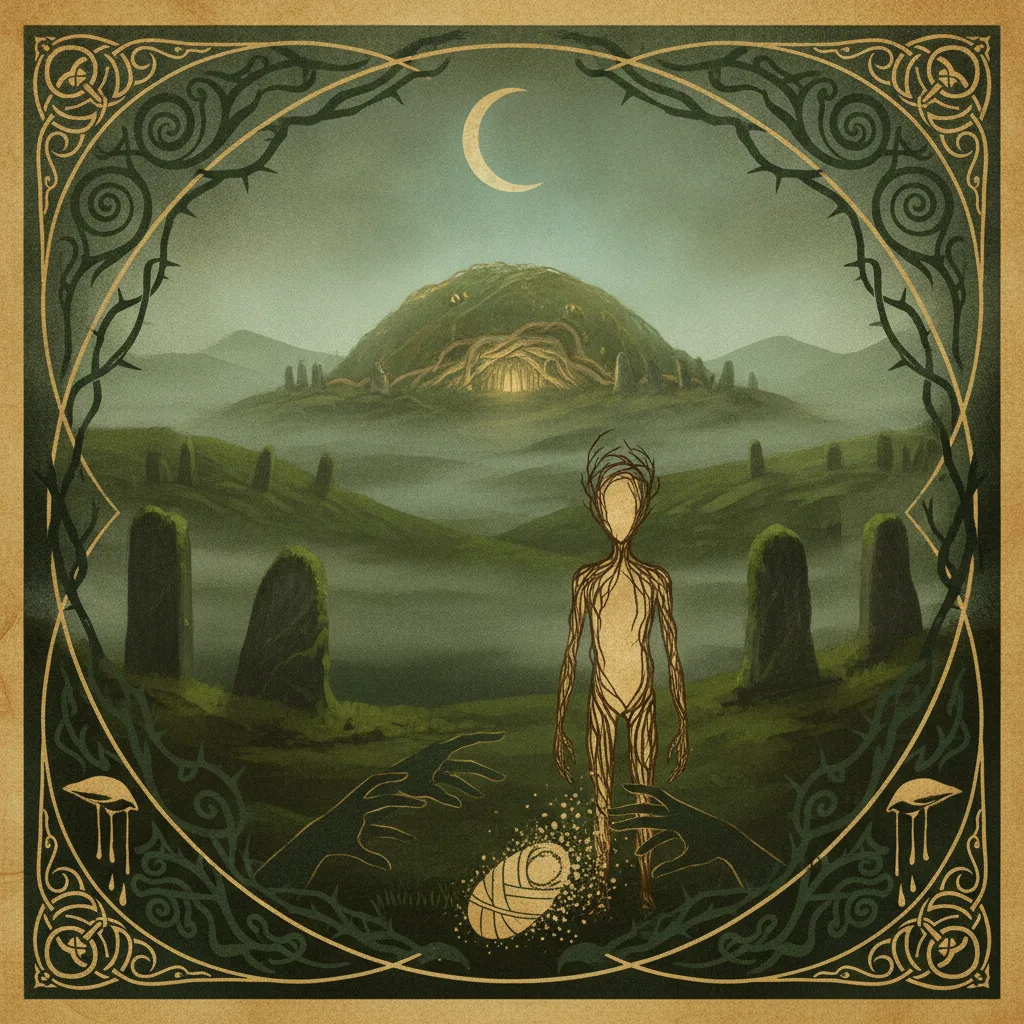
A changeling, in Irish and Scottish Gaelic belief, is a fairy substitute left in place of a healthy human — most often a baby — who has been stolen away by the fairies. In practice the belief was a folk explanation for illness, disability and infant failure-to-thrive, and its "cures" caused real, sometimes fatal, harm to vulnerable people.
- Belief that fairies swapped a healthy human (often an infant) for a look-alike substitute.
- A folk explanation for illness, disability and infant failure-to-thrive before modern medicine.
- Harmful "cures" — fire, foxglove, exposure — could neglect, torment or kill the sick.
- The 1895 burning of Bridget Cleary in Tipperary is the case that must be named.
- Documented across medieval Europe and in Croker, Wilde and Yeats; analysed by Angela Bourke.
| Tradition | Irish and Scottish Gaelic; a wider medieval European belief |
| Type | Fairy substitute / abduction belief |
| Earliest attestation | Medieval European theological and legal writing; Gaelic cases recorded 19th c. |
| Associated places | The home, the cradle, the ringfort; the hearth (site of 'cures') |
| Associated symbols | Iron, fire, foxglove (lus mór), eggshells, the threshold |
Most fairy lore can be enjoyed at a safe distance. The changeling belief cannot, and it would be dishonest to write about it as though it could. At its heart is a terrible idea: that the fairies steal a healthy human — most often a baby, sometimes a new mother or a grown adult — and leave in their place a substitute, a changeling, that only looks like the person who was taken. The belief is genuinely old and genuinely widespread. It is also the strand of folklore that did the most real harm to real, vulnerable human beings, and that harm has to be part of the story.
The belief, as it was held
In Irish and Scottish Gaelic tradition (Irish iarlais or síofra; Scottish Gaelic tàcharan), the changeling explained a very particular and frightening event: a child who had been thriving suddenly changed. It stopped growing, or grew wizened; it wailed constantly and could not be comforted; it fed endlessly without gaining weight; it failed to reach the milestones its siblings had. Sometimes it was said to be unnaturally old-looking, or preternaturally clever, or to show an appetite and a temper that seemed wrong in an infant. To a community without any concept of the conditions we now recognise, the conclusion was that this was not the same child. The real one was under the hill, and this was a fairy left in its place — an old fairy, a fairy stock of wood glamoured to look human, or the ailing child of the fairies themselves.
The changeling belief was, in effect, a folk explanation for illness, disability, developmental difference, and infant failure-to-thrive — arrived at by people with no other framework for them.
The “cures,” and why they are the dark part
Because the changeling was thought to be a fairy imposter, the folk remedies were not aimed at healing a sick child but at driving the changeling out so the fairies would return the real one. Recorded “tests” and “cures” include threatening the child with fire or placing it on or near the hearth; making it react to a surprise (the famous motif of brewing beer in eggshells, which supposedly startles the changeling into revealing its great age); dosing it with the toxic herb foxglove (Irish lus mór); leaving it exposed overnight; or ducking it in a river. These were sometimes symbolic and sometimes horrifyingly literal. Framed plainly: a belief system could lead frightened, grieving families to neglect, torment, or even kill a sick or disabled child or adult, in the sincere conviction that they were expelling a fairy. There is no way to romanticise this, and this publication does not try to.
Guarding against the theft
Far more common than any “cure” were the everyday precautions taken to stop a child being swapped in the first place, and these reveal how seriously the danger was felt. The window of greatest risk was the period between birth and baptism, when the infant was thought to be unprotected. So a piece of iron — a nail, an open scissors, a fire-tongs — was laid in or over the cradle, iron being anathema to the fairies. A garment of the father’s might be draped over the child, or a few drops of holy water sprinkled, or a red thread tied on. The baby was not left alone, and above all not left alone near a window or a ringfort at dusk. New mothers, believed to be at risk of being taken to nurse fairy children, were “churched” and watched. These customs were protective and, on their own terms, humane — the tragedy of the changeling belief is that the same worldview that produced a tender vigilance over the cradle could also produce the cruelty of the hearth-test.
Bridget Cleary — the case that must be named
The most infamous and best-documented instance is not a legend but a court record. In March 1895, in Ballyvadlea, County Tipperary, a twenty-six-year-old dressmaker named Bridget Cleary fell ill — probably with bronchitis or pneumonia. Over several days her husband, Michael Cleary, together with relatives and neighbours and on the advice of a local “fairy doctor,” became convinced that the woman in the bed was not Bridget but a changeling. She was subjected to ordeals — herbs, questioning, being held near the fire — and on the night of 15 March, Michael Cleary set her alight. She died. He spent days afterward waiting at a nearby ringfort, telling people he was waiting for the real Bridget to ride out from the fairies on a white horse.
The trial at Clonmel drew reporters from Dublin, London, and New York. Michael Cleary was convicted of manslaughter, not murder, and several others were convicted for their parts. The case became an international sensation, seized on in the British press as proof of Irish “backwardness” at a politically charged moment for Irish Home Rule — a framing that was itself unjust, but which shows how the story travelled. Bridget Cleary is sometimes called “the last witch burned in Ireland,” which is not quite accurate — it was a changeling killing, not a witch trial — but the phrase captures the horror. Her death is the clearest possible evidence that the changeling belief was not harmless whimsy.
What the sources say, and when
The changeling is one of the oldest documented fairy beliefs in Europe, referenced in medieval theological and legal writing across the continent, so it long predates the Irish and Scottish collectors. In the Gaelic tradition, the changeling appears throughout the nineteenth-century collections: Thomas Crofton Croker (Fairy Legends, 1825, including the eggshell-brewing tale “The Brewery of Eggshells”), Lady Wilde (Ancient Legends, 1887), and W. B. Yeats (Fairy and Folk Tales, 1888), whose poem “The Stolen Child” (1889) gave the abduction motif its most famous literary form. W. Y. Evans-Wentz’s The Fairy-Faith in Celtic Countries (1911) recorded changeling testimony as living belief. The Bridget Cleary case is documented in the 1895 court and press records and analysed at length in Angela Bourke’s study The Burning of Bridget Cleary (1999), the standard modern account.
Reading it honestly
Two things are true at once, and a responsible retelling holds both. First, the changeling belief is a real and important part of Irish and Scottish folklore, with deep roots and genuine cultural meaning; it deserves to be understood, not merely condemned. Second, it caused real suffering to real people — disabled children, sick infants, women with post-partum illness — who were failed and sometimes harmed because a community had no other way to make sense of what was happening to them. The modern reader should resist both the impulse to treat changeling stories as charming, and the impulse to feel superior to the people who believed them, who were frightened, grieving, and working with the only explanatory tools they had.
The changeling now
The changeling has become a rich metaphor in modern culture — in fantasy fiction and games it is a stock creature, and more thoughtfully it has been embraced by some autistic and disabled writers who reclaim the “changeling child” as an image of a difference that families once could not name. Historians and folklorists, meanwhile, read the old cases as a window into how pre-modern communities coped, and failed to cope, with disability and illness. Both readings are more honest than nostalgia. The changeling is the point where folklore stops being a pleasant story about the Otherworld and becomes a record of what fear can do to the vulnerable — which is exactly why it should be told carefully, and never prettified.
| Tradition | Irish and Scottish Gaelic (part of a wider European belief) |
| Earliest text | Medieval European theological/legal references (predating the Gaelic collectors) |
| Also appears | Croker (1825, 'The Brewery of Eggshells'), Lady Wilde (1887), Yeats (1888; poem 'The Stolen Child', 1889), Evans-Wentz (1911) |
| Later additions | The Bridget Cleary case (1895 court/press records); Angela Bourke, 'The Burning of Bridget Cleary' (1999) |
| Translation | Irish iarlais / síofra; Scottish Gaelic tàcharan |
| Reviewed | 2026-08 |
Frequently asked questions
What is a changeling?
In Irish and Scottish Gaelic belief, a fairy substitute left in place of a stolen human — usually a baby, sometimes a new mother or an adult. The changeling looks like the missing person but is really a fairy, a fairy's sick child, or an enchanted stock of wood.
What did the changeling belief actually explain?
It was a folk explanation for things a pre-modern community could not otherwise understand: infant failure-to-thrive, illness, disability, developmental difference, and post-partum illness in mothers. A child who suddenly 'changed' — stopped growing, cried constantly, fed without gaining — was thought to have been swapped.
Why is the changeling belief considered harmful?
Because the 'cures' aimed to drive out the fairy rather than heal the person. They included exposure to fire, foxglove (a toxic herb), ducking in water, and neglect. Frightened families could torment or kill sick and disabled children and adults in the sincere belief they were expelling a fairy. There is no way to romanticise this.
Who was Bridget Cleary?
A 26-year-old Tipperary dressmaker who fell ill in March 1895. Her husband and others became convinced she was a changeling and subjected her to ordeals; on 15 March 1895 her husband set her alight and she died. He was convicted of manslaughter. It is the best-documented changeling killing.
What are the main historical sources?
The belief is recorded across the 19th-century collections — Croker (1825), Lady Wilde (1887), Yeats (1888) — and as living belief by Evans-Wentz (1911). The Cleary case rests on 1895 court and press records and Angela Bourke's study 'The Burning of Bridget Cleary' (1999).
How should the changeling belief be read today?
Honestly, holding two truths at once: it is a genuine and meaningful part of Gaelic folklore, and it caused real suffering to vulnerable people. The right response is neither to find it charming nor to feel superior to those who believed it, but to understand it as how frightened communities coped with illness and disability.
