Celtic Legends Irish
Fairy forts (ráth and lios): the taboo that re-routed a road
Irish fairy forts (ráth, lios) are early-medieval ringforts held to be homes of the good people — and the taboo against disturbing them survived into modern Ireland, re-routing roadworks in 1999.
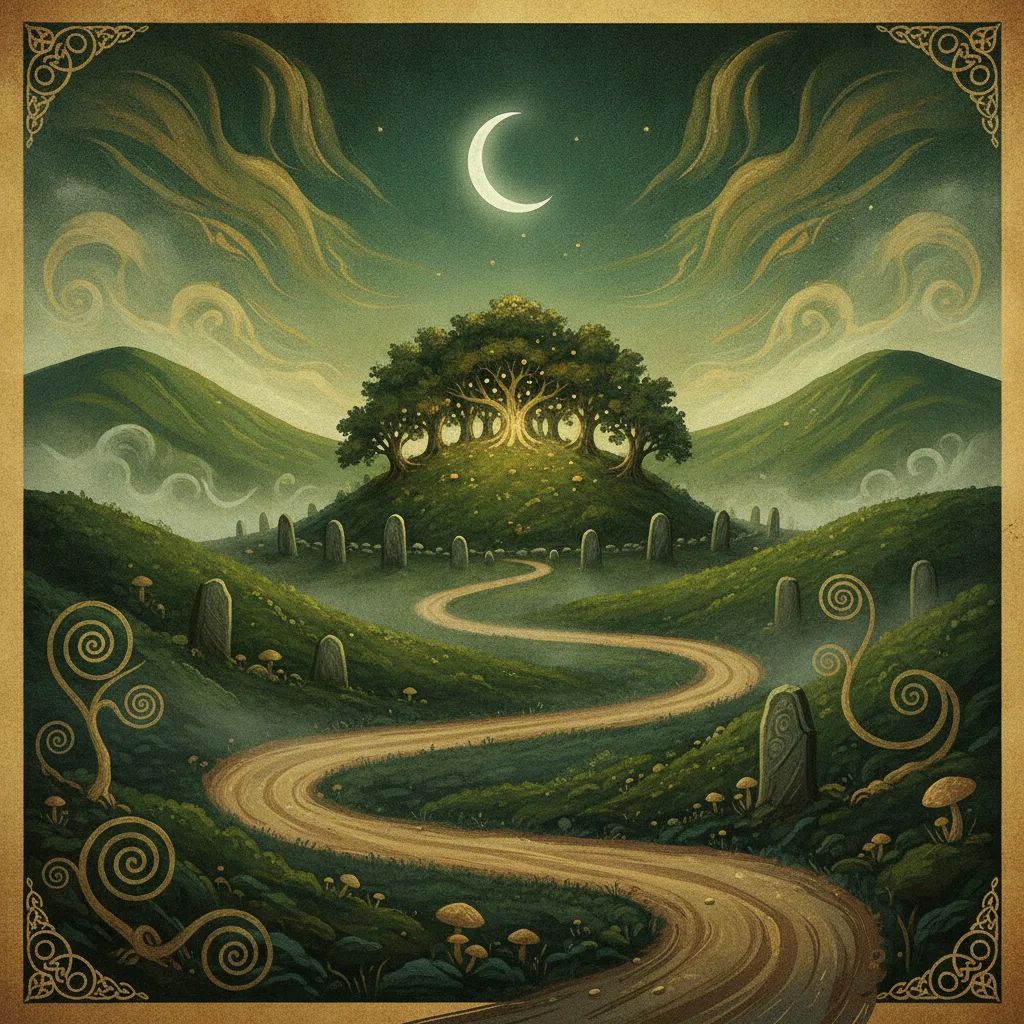
Fairy forts (Irish ráth or lios) are, in fact, ringforts - circular early-medieval farmsteads built roughly between the fifth and twelfth centuries. Folk belief held them, and the lone hawthorn, to be dwellings of the aos sí, and a strong taboo against disturbing them preserved the sites. In 1999 the belief famously re-routed roadworks around a fairy thorn in County Clare.
- 'Fairy forts' are ringforts: circular early-medieval farmsteads, roughly fifth to twelfth centuries AD.
- Folk belief made them, and the lone hawthorn, dwellings of the aos sí, not to be disturbed.
- The taboo acted as informal heritage protection, preserving tens of thousands of sites.
- In 1999 the Latoon fairy bush in County Clare re-routed road plans after Eddie Lenihan's warning.
- Documented by folklorists like Evans-Wentz (1911) and Lady Gregory (1920).
| Tradition | Irish |
| Type | Sacred/taboo place — a fairy dwelling |
| Earliest attestation | Ringforts built c. 5th-12th c. AD; taboo recorded by 19th-20th c. collectors |
| Associated places | Ringforts across Ireland; place-names in Rath-, Lis-, Cahir-, Dun- |
| Associated symbols | The circular earthwork, the lone hawthorn (sceach gheal), iron, the ditch |
Drive through the Irish countryside and you will pass them without always noticing: low circular rings of earth or stone in the middle of a field, often crowned with a tangle of thorn trees, ploughed carefully around rather than through. These are the fairy forts — in Irish ráth or lios — and the taboo against disturbing them is one of the most durable pieces of folk belief in Western Europe. It did not die with the nineteenth century. It shaped Irish farming into the twentieth, and it re-routed a motorway in 1999.
What the forts actually are
Here folklore and archaeology sit side by side, and both are worth stating clearly. The “fairy forts” are, in physical fact, ringforts: circular defended farmsteads built mostly in the early medieval period, roughly the fifth to twelfth centuries AD, though some enclosures are older. A ráth is an earthen ringfort with a bank and ditch; a lios properly names the open enclosed space within, though in practice the words are used interchangeably. Related sites include the stone caiseal or cathair (cashel), and the underground stone passages called souterrains that honeycomb many of them. Ireland is extraordinarily rich in them: tens of thousands survive, and the place-name elements Rath-, Lis-, Cahir-, and Dun- that pepper the map (Rathmines, Lismore, Cahirciveen, Dundalk) mark where they stood.
By the time the folklore took its modern shape, the people who built and lived in these forts were long forgotten, and the earthworks stood in the fields as visibly ancient, visibly made, and unclaimed. As with the burial mounds, memory filled the vacancy: these were the homes of the aos sí, the good people, entrances to the Otherworld — and therefore not to be meddled with.
The genius of the belief is that it protected the sites. A taboo dressed as fear of the fairies did the work that heritage law would only later attempt.
The taboo, and its rules
The prohibition was specific and widely shared. You did not plough out a fort, level its banks, or fill its ditch. You did not cut its trees — least of all the lone hawthorn (the “fairy thorn,” Irish sceach gheal), a single thorn tree standing apart in a field or on a fort, which was held to be especially the fairies’ own. You did not take stones or timber from a fort for building, nor bring its wood into the house for the fire. To break these rules was to invite misfortune of a very concrete kind: the death of livestock, the failure of crops, a wasting illness, bad luck that clung to a family for a generation, or the loss of the offender’s own life.
The lore is full of cautionary cases — the man who cut the fairy thorn and sickened, the farmer who bulldozed a fort and lost his cattle, the builder whose new house never prospered because it stood on fairy ground. Whether or not one believed the mechanism, the practical outcome was a landscape studded with untouched archaeological monuments, preserved by dread.
Fort and thorn — a distinction worth keeping
Popular writing often blurs the ringfort with the lone hawthorn, but they are distinct objects under a shared taboo. The ráth/lios is a built enclosure; the lone thorn is a single wild tree, and its power comes precisely from its solitude — a hawthorn growing by itself, especially in the open or on a fort, is marked out as the fairies’. Both are protected by the same avoidance, and both figure in the modern cases, but they are not the same thing.
The dark under the ring
Part of the forts’ uncanny reputation came from what they actually contained. Many ringforts are honeycombed with souterrains — drystone underground passages and chambers, built for storage or refuge, that survive as dark, narrow tunnels running beneath the turf. To a farmer whose plough suddenly broke through into a hidden stone passage, the idea that the fort was an entrance to an underground Otherworld needed no great leap of faith. Strange draughts, collapsing ground, echoing hollows, the occasional find of old bones or metalwork — the forts really did behave like doorways into somewhere else. The souterrains gave the belief a literal, physical underworld to point at.
The music of the forts is another persistent motif. People told of hearing pipe or fiddle music, or seeing lights, coming from a ráth at night, and of musicians who learned their finest tunes by overhearing the fairies — a whole strand of Irish traditional music is said to have been “got from the good people” at a fort. To fall asleep on a fort, or to be caught on one at the turning of the day, was to risk being taken. The place was not merely forbidden; it was alive.
What the sources say, and when
The belief was recorded by every major collector of Irish folklore. W. Y. Evans-Wentz gathered detailed testimony about forts and fairy dwellings for The Fairy-Faith in Celtic Countries (1911), and Lady Gregory’s Visions and Beliefs in the West of Ireland (1920) is full of first-hand accounts of forts and the consequences of disturbing them. The archaeological understanding of ringforts as early-medieval farmsteads was developed through the twentieth century, notably in the work of geographer and archaeologist E. Estyn Evans (Irish Folk Ways, 1957), who documented both the sites and the living beliefs attached to them. The Irish Folklore Commission’s mid-twentieth-century archives — including the Schools’ Collection of the 1930s, in which children across Ireland wrote down local lore — are thick with fort taboos, showing the belief thoroughly alive within living memory.
The belief in modern Ireland
The most striking evidence that this is not dead history is the Latoon fairy bush. In 1999, a new road (part of the works around the Newmarket-on-Fergus bypass / the wider N18 scheme in County Clare) was planned on a route that would have destroyed a lone hawthorn at Latoon. The storyteller and folklorist Eddie Lenihan publicly warned that the thorn was a meeting-place of the fairy hosts of Munster and Connacht, and that destroying it would bring misfortune — and deaths — to those using the new road. The story was picked up internationally, by outlets including The New York Times. Clare County Council altered its plans and the bush was spared; it still stands. Whatever one makes of the belief, a public authority in modern Ireland re-routed roadworks around a fairy thorn, and it was not the only such case: farmers and developers have quietly left ringforts and lone thorns undisturbed within living memory, sometimes citing luck, sometimes simply “you wouldn’t touch it.”
Why it lasted
The fort taboo endured longer than almost any other fairy belief because it was reinforced from several directions at once. It was tied to real, visible places on the land people worked every day. It carried concrete penalties that could be read into any subsequent misfortune. And it did something genuinely useful, preserving sites and trees that later generations would come to value as heritage and habitat — the lone hawthorn is now recognised as an ecological asset as well as a cultural one. Modern Ireland tends to hold the belief lightly and ironically, and yet the forts are still there, still ploughed around, still oddly untouchable. You do not have to believe in the good people to decline, on a quiet evening, to be the one who takes the bulldozer to their fort. That hesitation — practical, humorous, faintly serious — is the fairy faith in its last and most stubborn form.
| Tradition | Irish |
| Earliest text | The ringforts themselves are early-medieval (c. 5th-12th c.); the taboo is recorded by Evans-Wentz (1911) and Lady Gregory (1920) |
| Also appears | Irish Folklore Commission archives incl. the Schools' Collection (1930s); E. Estyn Evans, 'Irish Folk Ways' (1957) |
| Later additions | The Latoon fairy bush case (1999) — Eddie Lenihan and the Co. Clare road re-routing, reported internationally |
| Translation | ráth = 'ringfort'; lios = 'enclosure' |
| Reviewed | 2026-08 |
Frequently asked questions
What is a fairy fort?
A circular earthen or stone enclosure in the Irish landscape — in Irish a ráth or lios — held in folklore to be a home of the aos sí (the good people) and an entrance to the Otherworld, and therefore not to be disturbed.
What are fairy forts really?
Archaeologically they are ringforts: circular defended farmsteads built mostly in the early medieval period, roughly the 5th to 12th centuries AD. Tens of thousands survive in Ireland, and place-names in Rath-, Lis-, Cahir- and Dun- mark where they stood.
What were you forbidden to do?
You did not plough out a fort, level its banks, fill its ditch, take its stone or timber, or — above all — cut the lone hawthorn (sceach gheal) growing on or near it. Breaking the taboo was thought to bring the death of livestock, failed crops, illness, or ruin.
Did the belief really re-route a road?
Yes. In 1999 a lone hawthorn at Latoon, Co. Clare, lay on the route of planned roadworks. Storyteller Eddie Lenihan warned that destroying this fairy thorn would bring misfortune; after international coverage, Clare County Council altered its plans and the bush was spared. It still stands.
Is a fairy fort the same as a fairy thorn?
No, though they share the same taboo. A ráth/lios is a built ringfort; the lone hawthorn is a single wild tree whose power comes from its solitude. Both are protected by the same avoidance and both feature in modern cases.
Why did the fort taboo last so long?
Because it was tied to real, visible places worked every day, carried concrete penalties readable into any later misfortune, and did genuine good by preserving archaeological sites and trees. Modern Ireland holds it lightly, yet the forts are still ploughed around and left untouched.
