Tabletop RPGs and story games rooted in folklore
Tabletop RPGs genuinely rooted in folklore — Vaesen, Dolmenwood, Pendragon and Wanderhome — which engage a real tradition, and which just borrow the mood.
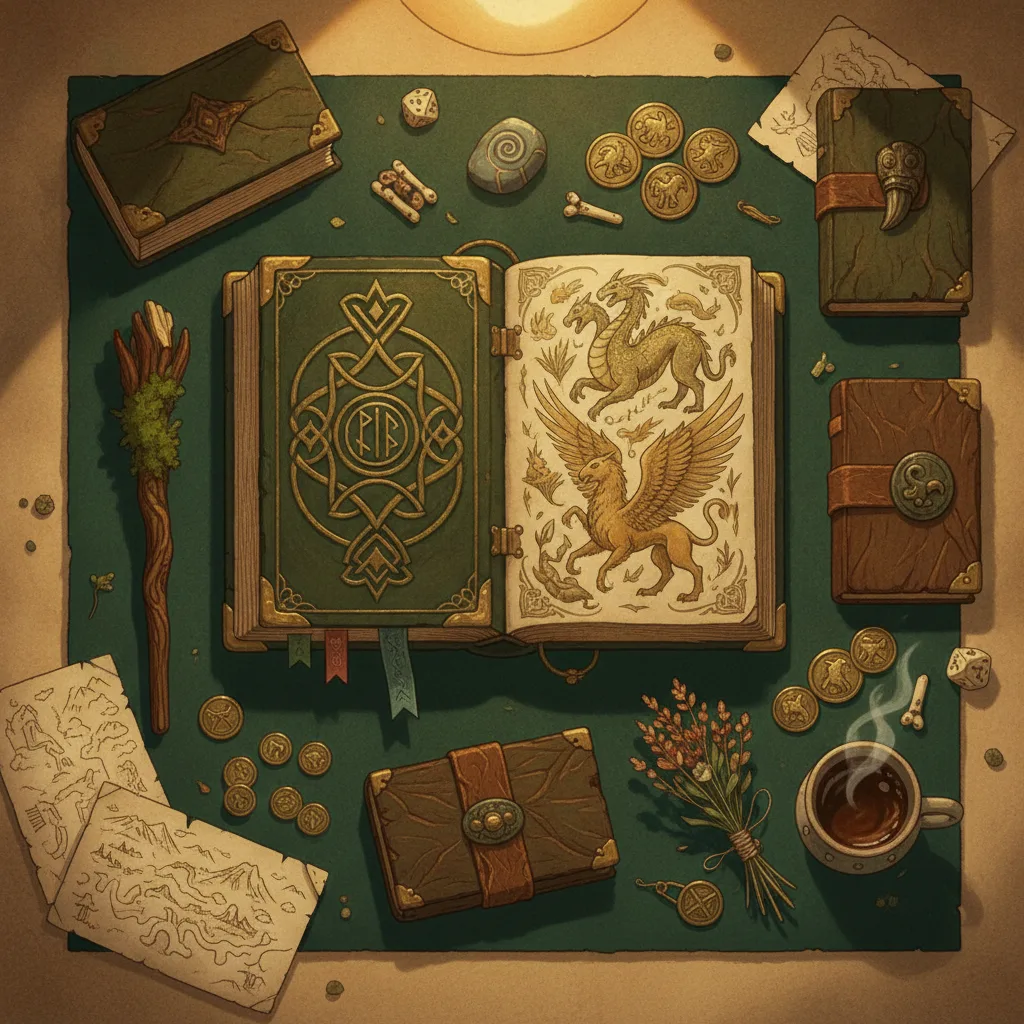
For folklore-rooted tabletop play, start with Vaesen, which grows from Egerkrans's Scandinavian folklore book; move to Dolmenwood for a whole British-fairy world, and King Arthur Pendragon for Arthurian legend across generations. Wanderhome evokes a folkloric mood without a specific tradition. Judge each by whether it names its sources.
- Vaesen is the easiest on-ramp, grounded in a real Scandinavian folklore book.
- Dolmenwood immerses players in the specific British fairy tradition.
- King Arthur Pendragon builds play on the actual Arthurian corpus across generations.
- Wanderhome borrows a folkloric mood openly, without a single tradition.
- Judge a game by whether it names sources and keeps traditions distinct.
Video games get most of the attention when we talk about folklore in play, but the tabletop hobby has quietly become one of the richest places for it. A roleplaying game can’t just show you a myth; it hands the tradition to a table of people and asks them to live inside it for a while. That makes the design choices matter enormously — how much real lore is in the book, how it is sourced, and whether the tradition is treated as a subject or as set dressing. Here are tabletop RPGs and story games genuinely rooted in folklore, and an honest account of how each handles the material. (For the digital equivalents, see our companion piece on folklore in video games.)
The gold standard: Vaesen
If one game shows how to build play on folklore properly, it is Vaesen – Nordic Horror Roleplaying (Free League Publishing, 2020), written by Nils Hintze and illustrated by Johan Egerkrans. It is set in a gaslit, nineteenth-century “Mythic North” where the old spirits — the Näcken who drowns fiddle-players, the forest-guarding Huldra, the household Nisse, the nightmare-bringing Mara — are real and increasingly at odds with a modernising Scandinavia. What makes it trustworthy is its foundation: it grows directly out of Egerkrans’s illustrated folklore book Vaesen: Spirits and Monsters of Scandinavian Folklore, which is a genuine popular treatment of the tradition rather than an invented bestiary. The creatures behave as the folklore says they do, with the real rules for placating or banishing them, and the game encourages players to solve mysteries by understanding the being rather than simply fighting it. It swept the ENNIE awards for its art in 2021, and the art is inseparable from why it works.
British fairy tale as a whole world: Dolmenwood
Dolmenwood (Necrotic Gnome, 2024), created by Gavin Norman and a team of collaborators, is the most thorough attempt yet to turn British folklore into a playable setting. Built on the Old-School Essentials rules, it drops players into an ancient, enclosed forest thick with the wonder and menace of the British fairy tradition: redcaps, the fungal folk, goat-headed breggles, and a genuinely alien fairy court whose bargains and etiquette echo the old ballads. Norman clearly knows the source — the eerie, morally slippery fairy of “Tam Lin” and the border tales, not the sanitised flower-fairy — and the setting captures the specific flavour of the British Isles rather than a generic “elves and dwarves” fantasy. It arrived as a set of handsome hardbacks after a 2023 crowdfunding campaign, and its Campaign Book took a gold ENNIE. For a table that wants to live in folklore rather than visit it, this is the deep end.
Legend as a whole life: King Arthur Pendragon
The elder statesman here is King Arthur Pendragon, Greg Stafford’s Arthurian roleplaying game, first published in 1985 and now back with its original publisher Chaosium (a new edition arrived in 2024). Pendragon is built directly on the matter of Britain — the Arthurian legend as it comes down through Geoffrey of Monmouth, the French romances and Malory — and its famous innovation is mechanical: knights are defined by Traits and Passions, and the game rewards you for behaving according to the chivalric and folkloric code even when it is ruinous. Campaigns famously run across generations, so you play a knight, then his children, watching the legend’s tragic arc unfold. It treats its tradition with real seriousness, and it remains one of the best demonstrations that mechanics themselves can carry a culture’s values, not just its monsters.
Folklore as mood: Wanderhome
Wanderhome (Possum Creek Games, 2021) by Jay Dragon belongs here with an honest asterisk. It is a gentle, GM-optional, diceless “belonging outside belonging” game about travelling animal-folk and the turning of the seasons, and it is one of the loveliest books in the hobby. But it is important to be accurate: Wanderhome is not rooted in a specific folk tradition. Its acknowledged influences are the Redwall novels and Studio Ghibli, and it evokes the feeling of pastoral folklore — small gods, wayside shrines, seasonal festivals — rather than transmitting any real one. That is a legitimate and beautiful design goal, and I mention the game precisely because it is a clean example of the honest end of “inspired by folklore”: it borrows a mood and never pretends to be an authentic record. Reach for it when you want the atmosphere of folklore without the weight of a particular culture’s beliefs.
How to judge whether a game “gets it right”
The same spectrum that applies to folklore video games applies here. At the strong end are games that engage a real tradition with real knowledge: Vaesen drawing on a genuine folklore book, Dolmenwood steeped in the specific British fairy tradition, Pendragon built on the actual Arthurian corpus. In the honest middle sit games like Wanderhome that borrow a folkloric mood openly and say so. At the weak end — the place to be wary of — are products that use a culture’s names and imagery as pure flavour, with no real lore behind them and no acknowledgement that they are inventing. The test is the one we apply to books: does the game tell you where its material comes from, and does it keep distinct traditions distinct rather than blending them into an interchangeable fantasy paste?
A note on living cultures
One more consideration matters at the table more than on the page. European folklore traditions like the Norse, British and Arthurian material above are historical and broadly in the public domain, and gaming with them raises few concerns. The picture changes with the living traditions of Indigenous and colonised peoples, where questions of consent, authorship and benefit come to the fore — the same questions that make the best folklore video games collaborate directly with the cultures they depict. A responsible game rooted in a living tradition should tell you who was consulted and who tells the story. It is worth asking that question before you buy.
Where to start
For a table new to folklore gaming, Vaesen is the easiest on-ramp: atmospheric, mystery-driven, and grounded in a real source you can read alongside it. Move to Dolmenwood when you want a whole folkloric world to inhabit, and to Pendragon when you want legend to shape a lifetime of play. Keep Wanderhome for the evenings when you want folklore’s gentleness without its darkness. Between them they cover most of what tabletop play can do with tradition — which, at its best, is not to museum-piece the old stories but to let a group of people stand inside them for a night and find out what they feel like from within.
Frequently asked questions
Which tabletop RPG best handles folklore?
Vaesen – Nordic Horror Roleplaying (Free League), which grows out of Johan Egerkrans's genuine Scandinavian folklore book and makes its creatures behave as the tradition says, so players solve mysteries by understanding the being rather than fighting it.
What is Dolmenwood based on?
The British fairy tradition, the eerie and morally ambiguous fairy of the old ballads rather than sanitised flower-fairies. Created by Gavin Norman of Necrotic Gnome, it is built on the Old-School Essentials rules.
Is Wanderhome based on real folklore?
Not a specific tradition. Jay Dragon's game evokes the mood of pastoral folklore, small gods, shrines and seasons, but its acknowledged influences are the Redwall novels and Studio Ghibli. It borrows the feeling honestly and never claims authenticity.
What makes King Arthur Pendragon folklore-rooted?
It is built on the matter of Britain, from Geoffrey of Monmouth and the French romances to Malory, and its Traits and Passions reward players for living the chivalric and folkloric code, even to their own ruin.
What should I watch for in a folklore game?
Whether it engages a real tradition with real knowledge or just uses names and imagery as flavour, whether it keeps distinct traditions distinct, and, for living cultures, whether it discloses who was consulted and who tells the story.
