How to Feature Folklore in Illustration Without Flattening the Culture
A craft-and-ethics guide to illustrating folklore with specificity — research, sourcing and crediting — using Rackham, Alan Lee and Jim Fitzpatrick as models.
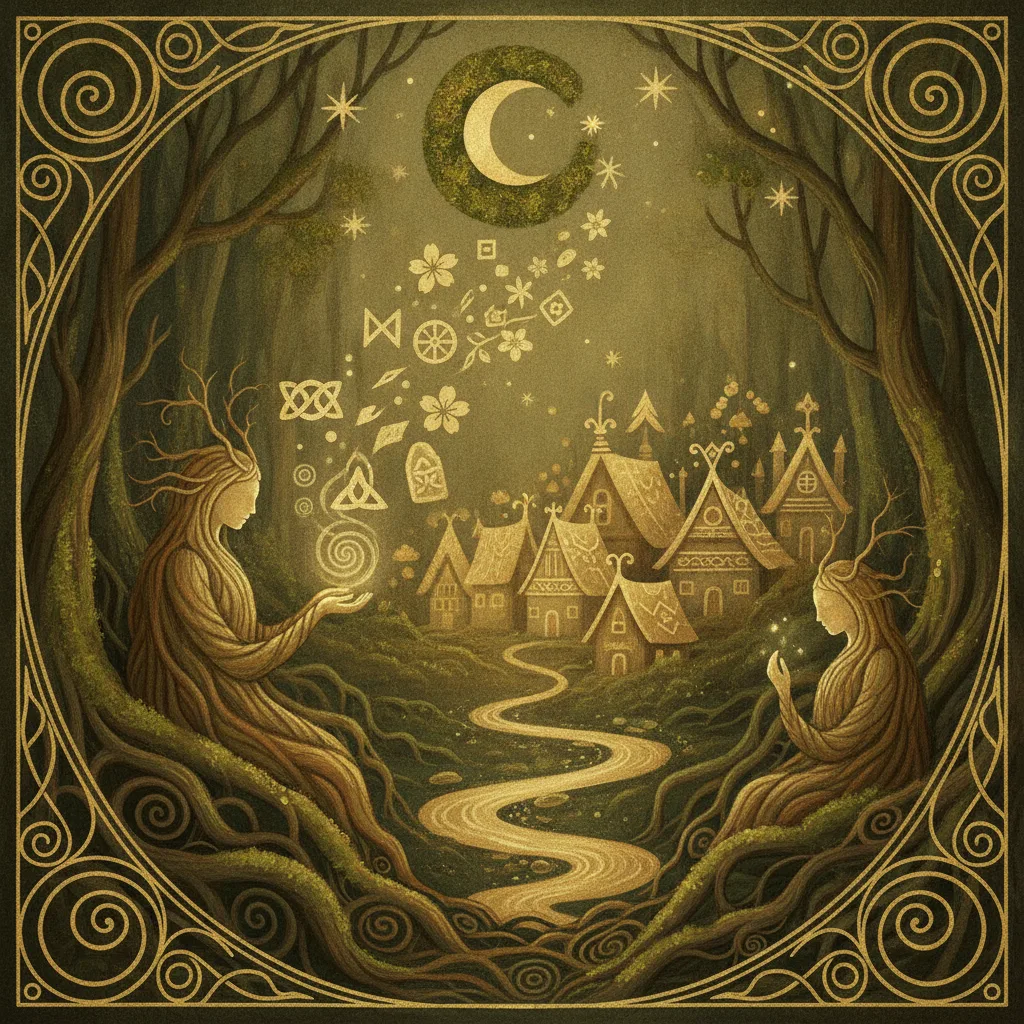
Feature folklore without flattening it by doing the research, citing the source and letting specificity replace pastiche. Learn from Rackham, Lee and Fitzpatrick, who drew from named tales, not generic Celtic mood. Start with the story, get load-bearing details right, credit tale, translator and manuscript, and be honest about invention. The test: could it be relabelled to another culture unchanged?
- Do the research, cite the source, let specificity replace pastiche.
- Rackham, Lee and Fitzpatrick worked from named tales, not moods.
- Start with the story and tradition before the aesthetic.
- Credit the tale, translator and manuscript; be honest about invention.
- Test: if relabelling to another culture works, it is too generic.
There is a particular look that has come to stand in for “Celtic” in fantasy illustration: a wash of green and gold, a knotwork border pulled from a font, a hooded figure, a standing stone, some mist. It sells, and it is also a kind of erasure — a smoothing-over of distinct traditions (Irish, Welsh, Scottish, Manx, Cornish, Breton) into one interchangeable mood. Featuring folklore in your work without flattening the culture it came from is not about walking on eggshells. It is a craft problem with a craft solution: do the research, cite the source, and let specificity do the work that pastiche cannot.
Learn from illustrators who went to the source
The artists whose folklore work still holds up are, almost without exception, the ones who read deeply and drew from named tales rather than a general vibe.
Arthur Rackham (1867–1939), one of the leading figures of the golden age of British book illustration, built his reputation on pen-and-ink line washed with watercolour. His suite for Irish Fairy Tales (1920) is a study in illustrating specific stories rather than a generic Celtic haze — his gnarled trees and sharp-featured folk come out of the text on the page.
Alan Lee (born 1947), best known now for his Tolkien and film work, produced watercolours for a translation of The Mabinogion that remain a benchmark for Welsh material — atmospheric, but anchored in the actual episodes of the Four Branches rather than invented set-dressing.
Jim Fitzpatrick (born 1944) took the opposite-seeming route to the same honesty: he steeped himself in the Irish Celtic artistic tradition and in the Mythological Cycle, then wrote and illustrated The Book of Conquests (1978) and The Silver Arm, retelling the coming of the Tuatha Dé Danann and the deeds of Nuada and Lugh with dense, deliberate scrollwork and knotwork. His imagery is unmistakably rooted in a specific mythology and a specific ornamental grammar, which is exactly why it never reads as generic.
The through-line is not style. Rackham, Lee and Fitzpatrick look nothing alike. It is that each of them worked from a named tale and a real visual tradition, and let those particulars shape the picture.
Research before you render
Start with the story, not the aesthetic. Before you design a character, know which tradition and which text they come from — the Morrígan of the Ulster Cycle is not interchangeable with a Welsh sovereignty figure, and a selkie is not a generic mermaid. Read a translation from a reliable source (the CELT corpus at University College Cork for Irish material is a good start), and where you can, study the period’s own art rather than other people’s fantasy of it. Our own folklore entries exist partly for this: to give you the specifics before the search engine hands you the cliché.
Get the details right — and know which details matter
Specificity is the antidote to flattening. A red cloak drawn from Táin Bó Regamna carries more conviction than a generic dark robe. White hounds with red ears say Cŵn Annwn; ordinary black dogs say nothing. Interlace with a consistent strand width reads as real Insular ornament; interlace that crosses itself at random reads as a knockoff. These are not pedantic points — they are the difference between an image that a reader from the culture recognises and one that makes them wince.
At the same time, learn which details are load-bearing and which are living tradition you should tread carefully around. Ornament and saga imagery are fair creative ground. Symbols still in active religious or communal use are not free décor — and if a motif’s meaning is genuinely sacred or contested, that is a reason to ask, read, or leave it out, not to guess.
Credit like it is part of the craft
Crediting your sources is not a legal chore bolted on at the end; it is part of doing the work honestly, and it makes your art better by making it checkable. Practical habits:
- Name the tale and figure in your caption or artist’s note — “the Morrígan at the ford, after Táin Bó Cúailnge” tells the viewer you know what you drew.
- Record shelfmarks for any manuscript page you studied, so you can credit or clear the image later (see the individual library’s terms — a scan can carry rights even when the artwork is public domain).
- Credit translators and collectors. The version of a ballad or saga you read is someone’s scholarship; naming them is basic courtesy and a signpost for your audience.
- Be honest about invention. If your winged crow-goddess is your own design rather than what the sources describe, say so. Naming the invention protects both your integrity and the tradition.
Avoiding “generic Celtic” pastiche
The practical test is this: could your piece be relabelled from Irish to Welsh to Scottish without changing a single element? If so, you have drawn a mood, not a myth. Push for the particular — this river, this condition, this named creature, this ornamental grammar — and the work stops being interchangeable. Pastiche is what happens when research runs out; specificity is what replaces it.
None of this dampens imagination. Rackham invented freely, Fitzpatrick stylised heavily, Lee dramatised — but all three built on foundations they had actually studied. Featuring folklore respectfully is not a set of prohibitions. It is the same discipline that makes any illustration strong: know your subject so well that you earn the right to reinvent it.
A short working checklist
If you want the whole argument as something you can pin above your desk, it reduces to a handful of questions to ask before you call a folklore piece finished:
- Which specific tradition and text is this from? If you cannot name it, you are drawing a mood, not a myth.
- Would it survive being relabelled to a different culture unchanged? If yes, push for more particularity until it would not.
- Have I read a real version, and can I name the translator? Secondhand impressions are how clichés propagate.
- Am I studying period art, or other people’s fantasy of it? Go one step closer to the primary source than your instinct suggests.
- Is any symbol I am using sacred or in living use? If so, ask or leave it — decoration is not a licence.
- Have I credited the tale, the manuscript, and the invention? Honest attribution is a feature of the work, not an afterthought.
Answer those honestly and the “don’t flatten the culture” worry mostly takes care of itself — because you will have done the specific, respectful, well-sourced work that flattening is the absence of.
Frequently asked questions
How do I avoid generic Celtic pastiche?
Apply one test: could your piece be relabelled from Irish to Welsh to Scottish without changing a single element? If so, you have drawn a mood, not a myth. Push for specifics: this river, this named creature, this ornamental grammar.
Which illustrators are good models for folklore work?
Arthur Rackham, whose Irish Fairy Tales (1920) illustrates specific stories; Alan Lee, whose watercolours for The Mabinogion anchor Welsh material; and Jim Fitzpatrick, whose The Book of Conquests (1978) is steeped in the Irish Mythological Cycle and its ornament.
Do I need to credit folklore sources?
Treat it as part of the craft. Name the tale and figure, record the shelfmark of any manuscript you studied, credit translators and collectors, and be honest about which elements are your own invention rather than what the sources describe.
Is it okay to invent new imagery for a myth?
Yes, as long as you name it as invention rather than passing it off as the historical record. Rackham invented freely, Fitzpatrick stylised heavily and Lee dramatised, but all three built on traditions they had actually studied.
Is Celtic one culture?
No. The word covers distinct Irish, Welsh, Scottish, Manx, Cornish and Breton traditions with different languages and literatures. Smoothing them into one interchangeable look is exactly the flattening to avoid.
