The Victorian fairy painting tradition
Richard Dadd, John Anster Fitzgerald and Joseph Noel Paton and the Victorian fairy-painting craze — a 19th-century movement, not a window on old folk belief.
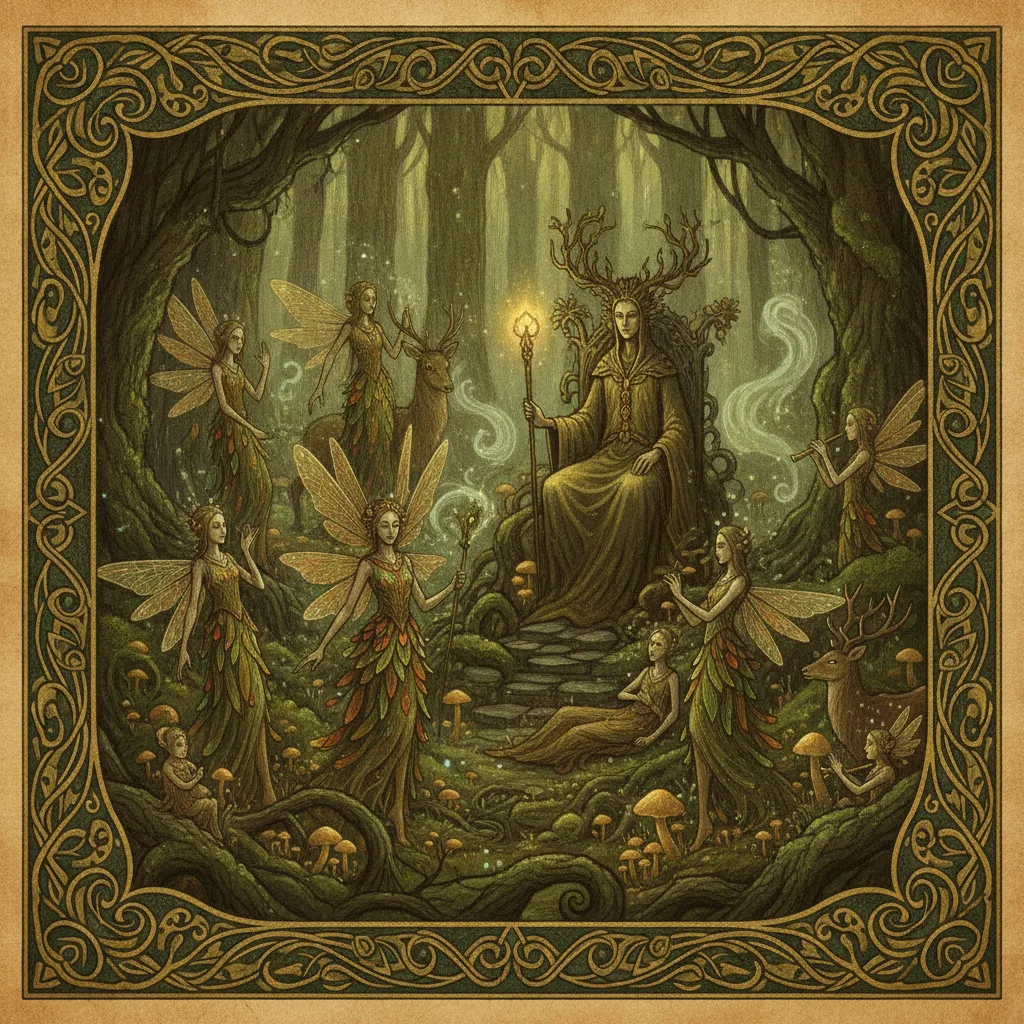
Victorian fairy painting was a nineteenth-century art movement (roughly 1840s-1870s), not a window onto ancient belief; its fairies come from Shakespeare and Romantic literature, not folk tradition. Its masters were Richard Dadd, John Anster Fitzgerald and Joseph Noel Paton, sharing jewel-like colour and minute detail. Learn their close natural observation, but not their theology, and use the public-domain images knowingly.
- Victorian fairy painting is an 1840s-1870s movement, not ancient belief.
- Its fairies derive from Shakespeare and Romantic literature.
- Dadd, Fitzgerald and Paton are the three masters to know.
- The style features jewel-like colour and obsessive minute detail.
- Learn their natural observation, not their theology; images are public domain.
For a few decades in the middle of the nineteenth century, British painting developed an obsession that still looks peculiar: serious artists, exhibiting at the Royal Academy, filled large canvases with fairies. Not folklore illustration in the modern sense, and not children’s-book whimsy, but ambitious oil paintings crowded with tiny winged figures, painted with the same finish a history painter would give a coronation. This was Victorian fairy painting, and understanding what it was — and was not — is useful for anyone who works with folklore imagery today.
A movement, not a survival
The first thing to be clear about is chronology. Victorian fairy painting is a nineteenth-century art movement, roughly the 1840s to the 1870s, not a window onto ancient belief. Its fairies owe far more to Shakespeare and to Romantic literature than to what rural people in Britain and Ireland actually feared and placated. When these painters reached for a story, they reached for A Midsummer Night’s Dream and The Tempest, for Spenser and for German Romantic tales — polished literary sources, not the darker oral tradition of the aos sí and the changeling.
Several forces converged to make the genre flourish. Shakespeare was hugely popular and endlessly staged. The Romantic taste for the supernatural was well established. And, in an increasingly industrial and rationalist age, the fairy subject offered painters a licence for fantasy — and, not incidentally, for painting the nude and the erotic under cover of the miniature and the make-believe.
The three names to know
Three painters are usually treated as the masters of the genre.
Richard Dadd (1817–1886)
Dadd is the most famous, partly for his work and partly for his life. A prodigiously gifted young painter, he suffered a mental breakdown and in 1843 killed his father; he spent the rest of his life confined, first at Bethlem Royal Hospital and later at Broadmoor. He kept painting throughout. His two most celebrated fairy works were made in the asylum: Contradiction: Oberon and Titania (1854–58) and the extraordinary The Fairy Feller’s Master-Stroke, worked on from about 1855 to 1864 and now in Tate.
The Master-Stroke is the genre’s strangest object: a small panel packed with obsessively fine figures watching a woodsman raise his axe to split a hazelnut, the whole scene built up in tiny, almost hallucinatory detail. Except for Oberon and Titania, Dadd said the figures came entirely from his own imagination. It is worth studying for its density and its refusal of a single focal point.
John Anster Fitzgerald (1819–1906)
Nicknamed “Fairy Fitzgerald,” he painted more fairy pictures than either of the others. His are the darkest in mood: alongside the pretty flower-fairies come ghouls, goblins and dream-scenes that many readers connect to the era’s fascination with opium and laudanum. If you want the genre’s uncanny side rather than its charm, Fitzgerald is where to look.
Sir Joseph Noel Paton (1821–1901)
A Scottish painter, Paton brought the ambition of history painting to the subject. His The Reconciliation of Oberon and Titania and its companion The Quarrel of Oberon and Titania (late 1840s) are large, teeming Shakespearean scenes. His later The Fairy Raid: Carrying off a Changeling (1867) is unusual in the genre for drawing on Celtic material and the changeling belief, layering ballad, myth and medieval reference into one crowded canvas.
What the style looks like — and why
Whatever their differences in temperament, these painters share a visual signature: jewel-like colour, translucent tonal effects, and an intense focus on minute detail. Grass blades, insect wings, dewdrops and toadstools are painted with a jeweller’s patience. The scale is part of the meaning — the smallness of the figures invites the viewer to lean in and lose themselves in a hidden world.
The genre rewards close looking. These are not paintings to be taken in at a glance; they are built to be searched, figure by figure.
That fineness was helped along by technical conditions of the time — better pigments, and the Pre-Raphaelite fashion for sharp, brilliant detail painted over a white ground, which pushed the whole of mid-Victorian painting toward clarity and colour.
What a folklore artist can take from it
The Victorian fairy painters are a rich, out-of-copyright resource, but they need to be used with the right label.
- Learn their looking, not their theology. The patience with small natural detail — real plants, real insects, close observation — is the transferable lesson. Their idea of what a fairy is, on the other hand, is Shakespearean stagecraft, not folk belief.
- Mind the gap between literary and oral tradition. If your project is about the folk fairy — the dangerous, bargaining, child-stealing neighbour of the oral tradition — these paintings will mislead you toward gauze and butterfly wings. Paton’s Fairy Raid is the exception worth studying precisely because it engages the changeling belief.
- Composition without a hero. Dadd’s crowded, focus-scattering panels are a masterclass in building an image that has no single protagonist — useful for anyone illustrating a teeming otherworld.
- They are public domain. All three artists died long enough ago that their work is freely usable for study and reference; museum sites hold good high-resolution images. See our guide to public-domain art for folklore work for how to source and credit such material.
Why it faded, and why it lasts
The vogue passed. Photography, changing taste and the arrival of the great book illustrators shifted fantasy imagery from the exhibition wall to the printed page; by the turn of the century the fairy had migrated to children’s books and to illustrators whose lineage we trace in our piece on folklore in illustration from Arthur Rackham to now.
But the best of these paintings never lost their strangeness. Dadd’s asylum panels in particular have gone on being written about, exhibited and even sung about, because they are not really about fairies at all — they are about the human capacity to build an entire, coherent, teeming world inside a frame the size of a book. That is a fair ambition for any folklore artist to inherit, so long as you remember where the fairies came from.
Frequently asked questions
What was Victorian fairy painting?
A British art movement roughly from the 1840s to the 1870s: ambitious oil paintings of fairies, exhibited seriously, drawn largely from Shakespeare and Romantic literature rather than from oral folk belief.
Who were its principal artists?
Richard Dadd (1817–1886), John Anster Fitzgerald (1819–1906) and Sir Joseph Noel Paton (1821–1901) are usually named as the masters of the genre.
What is The Fairy Feller's Master-Stroke?
Richard Dadd's obsessively detailed panel, worked on from about 1855 to 1864 while he was confined in Bethlem Royal Hospital. It is now in Tate.
Why did Dadd paint in an asylum?
He suffered a breakdown and killed his father in 1843, and spent the rest of his life confined, first at Bethlem and later at Broadmoor, painting throughout.
Are these paintings in the public domain?
Yes. All three artists died long enough ago that their work is out of copyright, and museums such as Tate hold high-resolution images useful for study.
