Say It Right: Tuatha Dé Danann
How to say Tuatha Dé Danann — "TOO-ah-ha day DAN-un," the divine race of Irish myth who became the fairy folk.
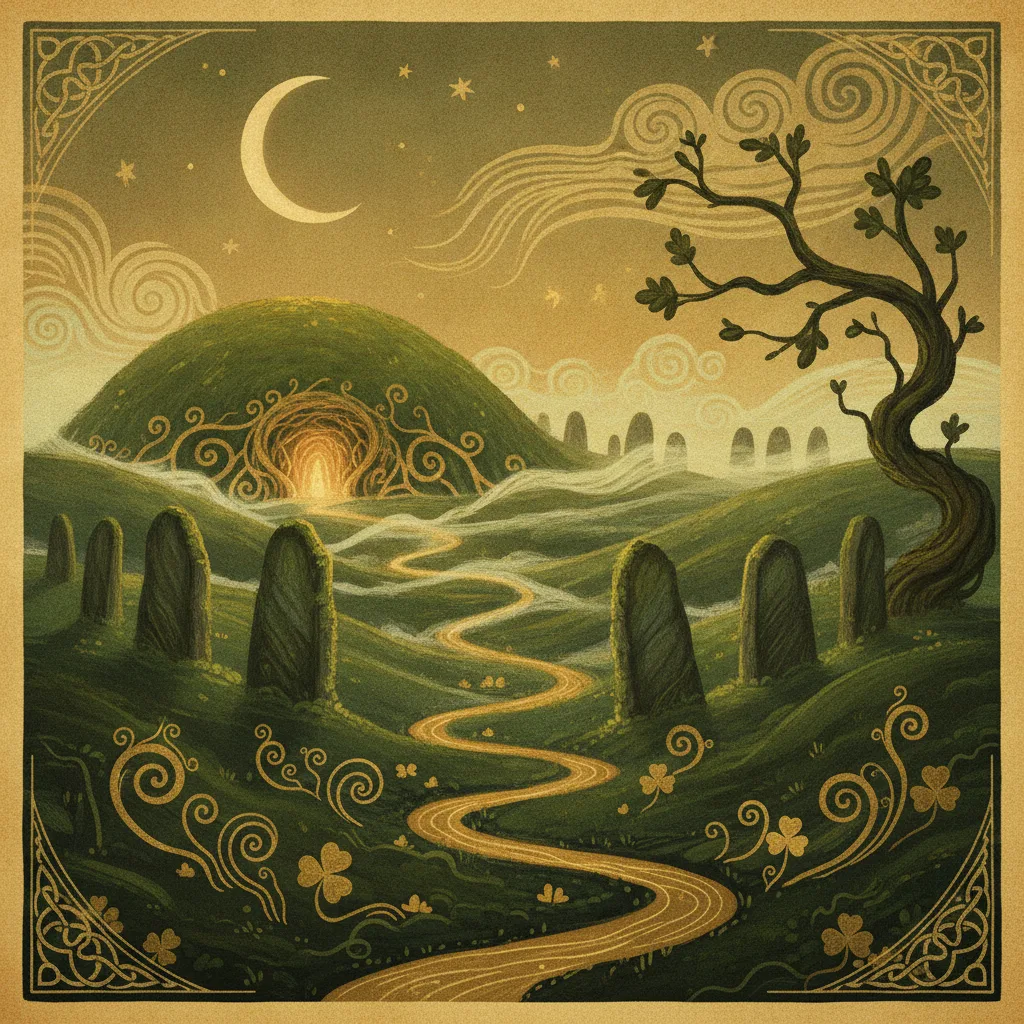
Tuatha Dé Danann is pronounced roughly 'TOO-ah-ha day DAN-un,' three light syllables then 'day' then 'DAN-un' with the stress up front; the th is soft, nearer an 'h.' It usually means 'the peoples of the goddess Danu' (a somewhat reconstructed name) - the divine race of Irish myth who retreat into the fairy mounds.
- Tuatha Dé Danann is said roughly 'TOO-ah-ha day DAN-un,' stress on the first syllable of each part.
- The th in Tuatha is soft, closer to 'h' than the English 'th' of 'think.'
- Avoid a hard English 'th' or thumping the final syllable ('dan-AN').
- It means roughly 'peoples of the goddess Danu,' a somewhat reconstructed name.
- They are the divine race of Irish myth who retreat into the síde, the fairy mounds.
It looks like a mouthful, but it comes apart into manageable pieces: “TOO-ah-ha day DAN-un.” Take it slowly — Tuatha (“TOO-ah-ha,” three light syllables), Dé (“day”), Danann (“DAN-un,” stress on the first).
The th in Tuatha is soft, closer to an “h” than the English “th” of “think.” Dé is simply “day.” Danann is two syllables with a light second one — resist the urge to say “dan-AN” with a heavy ending.
Meaning: Tuatha Dé Danann is usually rendered “the peoples (or tribe) of the goddess Danu” — a somewhat reconstructed name — or “of Danann.” They are the divine race of Irish myth: the gods who, in the pseudo-history, arrive in Ireland, defeat the Fomoire at the Second Battle of Mag Tuired, and are later said to retreat into the síde, the fairy mounds — which is how the gods of Ireland become its fairy folk.
Mispronunciations to avoid: “too-AH-tha DEE DAN-an” with a hard English “th,” “twah-thah,” and “day DAN-ann” thumped on the last syllable. Ease off the endings and keep it flowing.
Where it comes from: Old Irish tuath (“people, tribe”) + Dé (“of the goddess/god”) + Danann; they are central to the medieval Lebor Gabála Érenn (“Book of the Taking of Ireland”).
A memory trick: break it into a little chant — “TOO-ah-ha / day / DAN-un” — and say it as three easy beats rather than one intimidating block.
These are, in effect, the gods of pagan Ireland as the medieval Christian writers chose to remember them: not worshipped deities but a gifted, otherworldly race in the island’s legendary history. The Lebor Gabála Érenn tells how they arrive wreathed in mist, bring four great treasures — the Lia Fáil, the spear of Lug, the sword of Núadu and the Dagda‘s cauldron — and overthrow the Fomoire at the Second Battle of Mag Tuired.
The most resonant part of their story is its ending. Defeated in turn by the incoming Milesians (the ancestors of the Gael), the Tuatha Dé Danann are said to withdraw not overseas but downward — into the síde, the fairy mounds. That is the hinge on which Irish myth turns into Irish fairy-lore: the old gods become the aos sí, the people of the mounds. Say their name well and you are naming the bridge between the two.
