Samhain décor that isn’t Halloween-store plastic
Dress your home for Samhain with foraged, natural and maker-made materials instead of moulded plastic: light, palette, scent and honouring the ancestors.
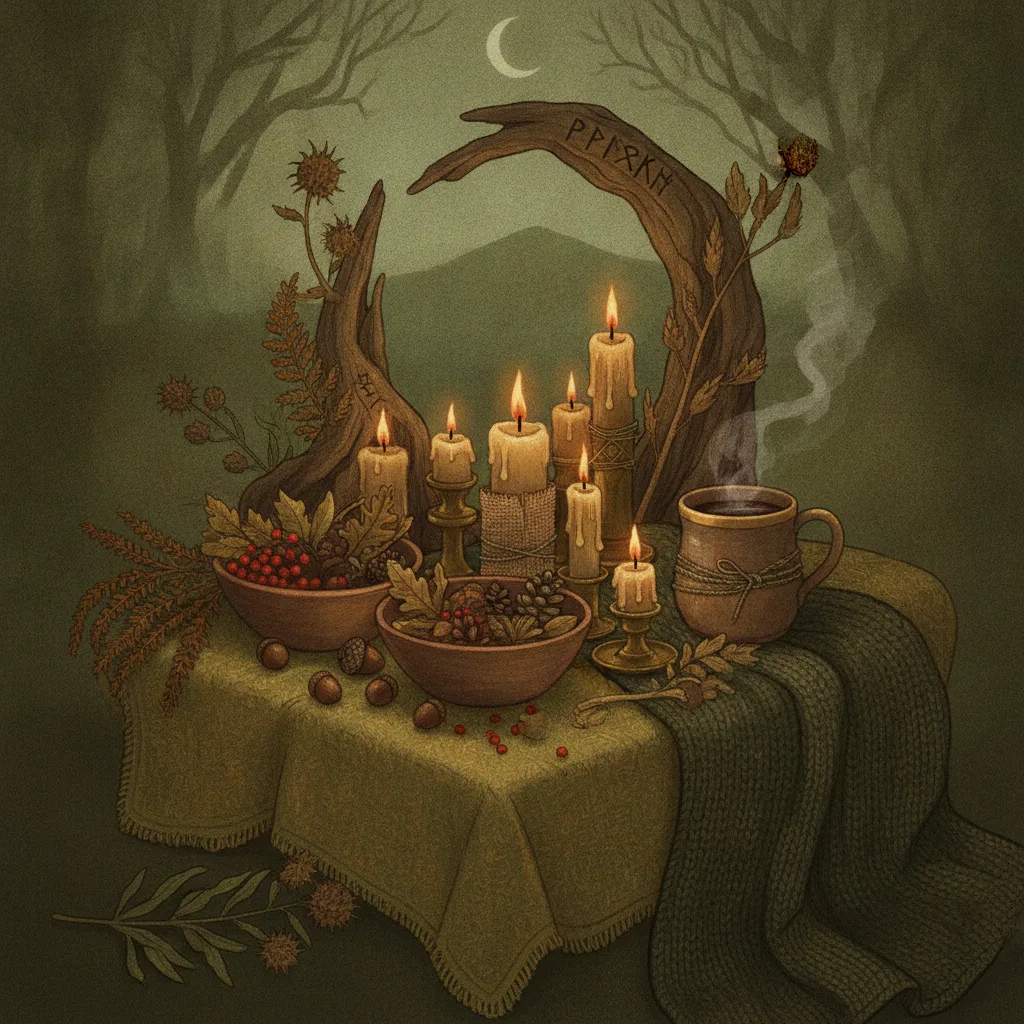
Samhain marks the harvest's end and winter's start, when the boundary with the otherworld thinned and the dead were remembered. Dress a home from what the season gives: last-harvest fruit, bare branches, seedheads, even a carved turnip lantern. Light it with real beeswax flame, buy from makers in natural materials, honour the ancestors, and let the foraged material compost afterwards.
- Samhain marks harvest's end and the turn to winter.
- Forage last-harvest fruit, bare branches and seedheads for decor.
- The older Irish and Scottish lantern was carved from a turnip.
- Light with real beeswax flame; buy from makers in natural materials.
- Honour the ancestors; let foraged material compost afterwards.
Samhain and the Halloween aisle share a date and almost nothing else. The festival — pronounced roughly “SOW-in” — marks the end of the harvest and the beginning of winter in the old Gaelic calendar, a threshold time when the boundary between this world and the otherworld was thought to thin, and the dead and the ancestors were remembered and welcomed. It is a season of turning inward, of last gatherings and firelight, of honouring what the year has grown and let die. None of that is well served by a bag of moulded orange plastic. Here is how to dress a home for Samhain with materials that actually belong to the season, and makers worth seeking out.
Start with what the season gives you
The most authentic Samhain décor is largely free and already ripening around you in late October. Before you buy anything, gather.
- The last of the harvest: squashes and gourds, of course, but also apples (deeply tied to the season and to divination games), sloes, rosehips, hawthorn haws, dried corn and the final windfall pears.
- Bare and turning branches: oak and hazel with their nuts, beech in copper, and the black architecture of bare twigs, which read as Samhain far better than anything spray-painted.
- Seedheads and grasses: teasel, poppy heads, honesty’s silver discs, dried hydrangea, wheat and barley — the skeleton of the growing year.
- The turnip, not just the pumpkin: the older Irish and Scottish lantern was carved from a turnip or swede, and a single hand-carved turnip lantern, with its stubborn density and eerie glow, is a quietly radical centrepiece.
Arranged in a wooden trug or an old bowl, foraged material sets the whole tone, and it composts when the season turns. That impermanence is the point: Samhain is about the harvest ending, not about a display that outlasts it in landfill.
Light it honestly
Samhain is a fire festival, and light is its heart — but the light matters. Skip the flickering LED tea-light and the plastic string, and reach for real flame where you safely can.
- Beeswax candles from a small chandler or a local apiary: they burn warm and gold, smell faintly of honey, and are a genuinely different object from a paraffin pillar. Look for makers who sell by the beehive as much as the candle.
- Tallow or rush lights if you want to go properly old — several traditional-crafts makers still produce them, and a rushlight holder is a beautiful, strange thing to own.
- Blacksmith-made iron lanterns and candle holders. A forged holder from a working smith has a weight and irregularity no factory lantern matches, and iron itself carries old protective associations in the folklore of the threshold.
Whatever you burn, never leave open flame unattended, keep it clear of dried foliage, and give children and animals a wide margin.
Choose makers over mass production
You don’t need a fictional “witchy boutique” to do this well. The point is to buy from people who work in natural materials, and those makers exist in almost every craft. Think in terms of the maker, not the shop sign:
- Wheel-thrown potters for candle holders, incense dishes, offering bowls and small vessels in unglazed or ash-glazed stoneware — earthy, tactile, made to hold a single apple or a handful of hazelnuts.
- Dried-flower growers and florists who grow and dry their own stems; a seasonal wreath of teasel, wheat, seedheads and bare twig from a grower beats a plastic garland in every way and lasts for years.
- Woodturners and green-woodworkers for bowls, spoons and small bobbins turned from local fallen timber — often sold with the species named.
- Natural dyers and weavers for a runner or cloth in the season’s colours: madder red, walnut brown, iron-grey, weld yellow, all achievable with plant and mineral dyes.
- Beekeepers and small chandlers for the candles above, and for beeswax wraps and polish.
- Basket-makers in willow and hazel, for gathering baskets that double as display.
When you buy, ask where the material came from and who made it — good makers are glad to tell you, and the answer is part of what you are bringing into the house.
Scent, not spray
Halloween-store décor is oddly silent on smell, or reaches for synthetic “pumpkin spice.” The real season has its own scents, and they are easy to bring in honestly. A bowl of stored apples perfumes a room on its own. Dried herbs gathered at the end of summer — mugwort, rosemary, bay — can be bundled and hung. Whole spices simmered gently on the stove, or a few cloves pushed into an orange to make a pomander, fill a house the old way. If you burn resin or dried botanicals, use a proper heatproof holder, keep the room ventilated, and be mindful of anyone with asthma or of pets, for whom some plants and smoke are genuinely unsuitable. The aim throughout is the actual smell of late autumn indoors, not a fragrance labelled to imitate it.
A palette that belongs to late autumn
Steer away from the Halloween-store scheme of high-vis orange and jet black. The real season is richer and quieter: russet and oxblood, the browns of oak and chestnut, deep bruised purples of sloe and elderberry, the grey-green of lichen, the black of bare branch and iron, and the warm gold of candlelight to lift it. Natural materials arrive in these colours on their own, which is half the reason they look right together.
Remember the ancestors
At its core Samhain is a remembrance of the dead. Many people keep the old custom of setting a place at the table, or leaving a small offering of food and drink for those who have gone before, and of lighting a candle for named ancestors. A framed photograph, a favourite object, a plate of the season’s food — this is décor that means something, and it costs nothing but attention. If you keep a seasonal shelf or altar, this is the season to turn it toward memory.
Let it be temporary
The deepest difference between Samhain and the plastic aisle is time. Halloween décor is built to be boxed and reused for a decade; Samhain décor is meant to grow, glow and then return to the earth. Compost the foraged material when Yule approaches, save only the made objects — the pottery, the iron, the dried wreath — and let the rest go. A home dressed this way looks less like a shop display and more like what it is: a house paying attention to the turning of the year.
Frequently asked questions
What is Samhain?
Samhain (roughly SOW-in) is the old Gaelic festival marking the end of the harvest and the start of winter, around 1 November. It was seen as a threshold time when the boundary between worlds thinned and the ancestors were remembered.
How is Samhain décor different from Halloween decorations?
Samhain décor favours natural, often foraged and compostable materials, real flame, an autumnal palette and remembrance of the dead, rather than the reusable moulded plastic and high-vis orange of the Halloween aisle.
What materials suit a Samhain display?
The last of the harvest (squashes, apples, nuts, sloes), bare and turning branches, dried grasses and seedheads, beeswax candles, forged iron, and hand-thrown pottery. A carved turnip lantern is a traditional Irish and Scottish touch.
Where can I buy natural Samhain décor?
Look for small makers rather than a particular shop: wheel-thrown potters, dried-flower growers, woodturners, blacksmiths, natural dyers, basket-makers and small beeswax chandlers. Ask where the materials came from.
What colours work for Samhain?
Russet and oxblood, oak and chestnut browns, the deep purples of sloe and elderberry, lichen grey, and the black of bare branch and iron, all lifted by warm candlelight. Natural materials arrive in these tones on their own.
