Keeping a folklore sketchbook: a practice
A research-led sketchbook practice for folklore artists: copy real sources by hand, draw from primary art, and track provenance so the cliché never fills the page.
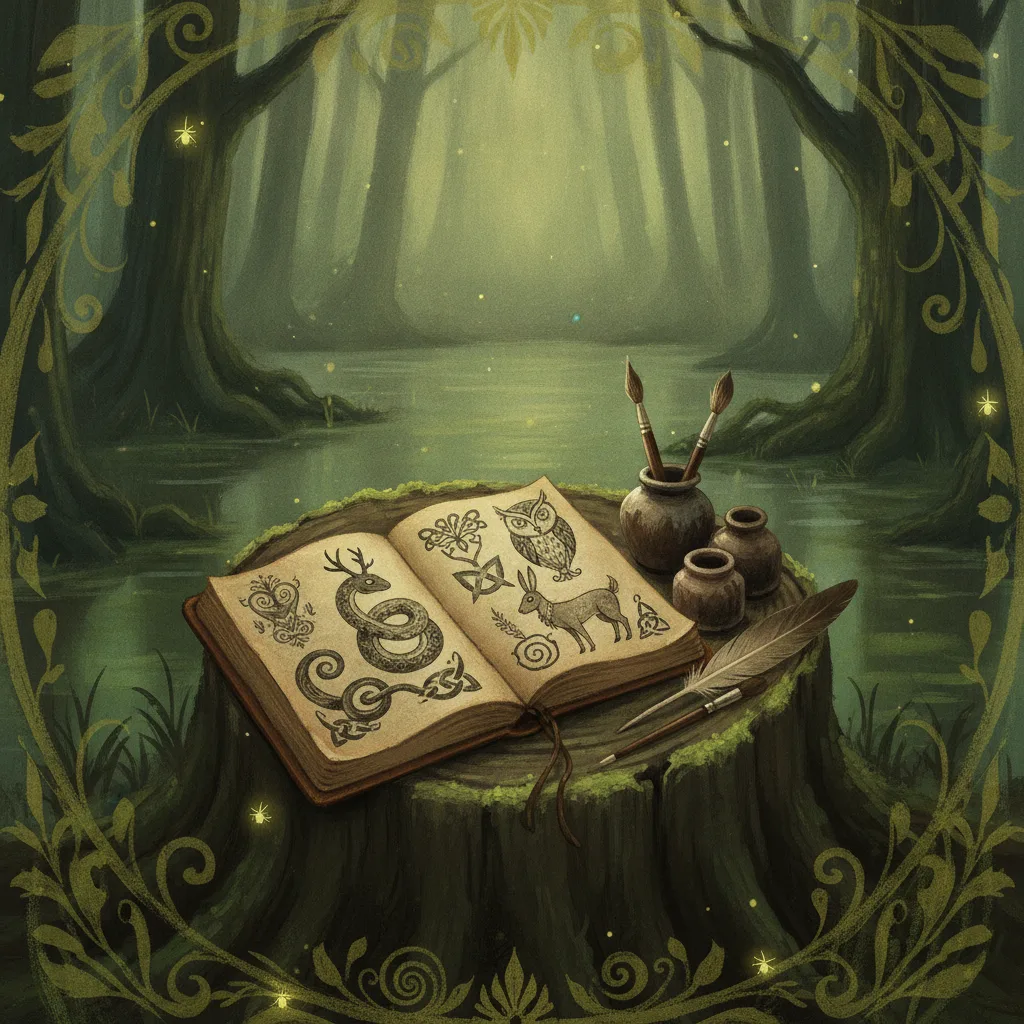
A folklore sketchbook is a research instrument, not a drawing habit: read and draw in the same book so source and image steer each other. Fill it with hand-copied source quotations, studies from primary art, observed reality and your working-out, labelling what is sourced and what is invented. Use cheap paper daily, keep it ugly, and cross-check as you learn.
- Treat the sketchbook as a research tool, not just drawing.
- Keep reading and drawing in the same book together.
- Include quotations, studies from primary art, observation and your working-out.
- Label clearly which details are sourced and which are invented.
- Prefer cheap paper used daily; keep pages ugly and working.
Most advice about keeping a sketchbook treats it as a place to loosen up: draw daily, fill pages, do not judge. That is good advice, and it is not quite what this is about. A folklore sketchbook is a research instrument as much as a drawing habit — a place where reading and drawing happen in the same book, so that what you learn about a tradition and what you can picture of it grow together. This is a practice, not a set of rules, and the point of it is to make you a better-informed artist, not a faster one.
Why the two halves belong in one book
The failure mode of folklore art is drawing the cliché — the generic druid, the gothic crow-goddess, the butterfly-winged fairy — because the cliché is what is already in your hand. The cure is to put the source and the pencil in contact. When you copy a line from a translation onto the same page where you are sketching, the specific detail in the text starts steering the drawing, and the drawing starts asking questions the text has to answer.
A folklore sketchbook is where reading stops being passive. You cannot draw the washer at the ford without deciding what she is washing — and that sends you back to the text.
What goes in it
Think of the book as holding four kinds of material, mixed freely rather than kept in separate sections.
- Source quotations. Copy, by hand, the actual lines that describe a figure — the Morrígan in her red cloak with red brows, the reversed joints of Cú Chulainn‘s frenzy, the white-with-red-ears cattle of the otherworld. Note the text and translator beside each. Writing it out slows you down enough to notice the details you would skim past.
- Studies from primary art. Copies from the sources of the visual tradition — Insular manuscript interlace, museum objects, period dress and weapons. Draw from the Book of Kells rather than from someone else’s “Celtic art,” so you learn the grammar and not the accent.
- Observed reality. The plants, birds, water, light and landscape the stories actually name. A crow drawn from a real crow, a ford drawn from a real river-edge. The Victorian fairy painters’ great strength was exactly this close observation of the natural world.
- Your own working-out. Thumbnails, failed compositions, notes to yourself about what you do not yet know. The margin question — “what colour is her horse?” — is often the most valuable thing on the page.
A working method
A simple loop keeps the research and the drawing feeding each other.
- Read a passage and mark the concrete details. Ignore the mood and hunt for specifics: colours, objects, gestures, places, animals. A single scene from the Táin or a Grimm tale will usually give you several.
- Copy the load-bearing lines by hand. The ones that describe something you would have to draw. This is the step people skip, and it is the one that stops you defaulting to cliché.
- Sketch straight from those lines. Not a finished image — a study that tries to honour the specific detail. If the text says her chariot-horse has one leg, draw the problem of a one-legged horse rather than substituting a normal one.
- Note what the text did not tell you. Write the gaps down as questions. These become your next reading, and they are where your own invention will legitimately go — labelled, so you always know which parts are sourced and which are yours.
- Come back and cross-check. Later, read a second source or a piece of scholarship and correct the page. The sketchbook becomes a record of a belief revised, which is what real research looks like.
Sourcing your reference honestly
A research-led sketchbook is only as good as what you feed it. Two principles keep it clean.
First, prefer primary material. Copying from the manuscripts, museum photographs and translated texts themselves — rather than from other artists’ interpretations — is what keeps your work from being a copy of a copy. Public-domain collections make this practical; our guide to public-domain manuscript art for folklore work covers where to find usable, out-of-copyright images.
Second, keep track of provenance on the page. Note which tradition and which text each element comes from. It costs a few seconds and it means that months later you can tell, at a glance, whether the red cloak was in the Táin or in your imagination. That habit is the difference between a sketchbook that deepens your knowledge and one that quietly launders your assumptions into “facts.”
Paper, screen, and one book or many
The format matters far less than people fear. A bound paper book, a ring binder of loose sheets, a tablet — any of them works, and the only real requirement is that text and drawing can sit side by side, because separating them back into different apps or notebooks defeats the whole point. Paper has one quiet advantage: hand-copying a quotation is slow in a way that helps you notice detail, and a screen makes it tempting to paste instead of write. But use whatever you will actually open every day.
One book or several is a matter of taste. Some artists keep a single running sketchbook and let traditions mingle, which has the benefit of surprising cross-connections — a Norse binding-oath sketched next to an Irish geis. Others keep a book per tradition or per project. Either is fine; what matters is that the book stays a working tool and not an archive you are afraid to touch. Cheap paper you will fill beats good paper you will hoard.
On the habit itself
The daily-practice advice is still true: the book works because it is used often and used badly. Ugly pages are fine; the point is contact with the material, not a portfolio. A folklore sketchbook that is precious and pretty is not doing its job, because you will be afraid to put the awkward one-legged horse or the reversed-jointed hero in it.
Over time the book becomes something more useful than a gallery of finished pieces: a personal reference to a tradition, in your own hand, with the sources attached. When you sit down to make a real illustration — of the Morrígan, of Cú Chulainn’s frenzy, of a Grimm tale — you are not starting from the cliché in your head. You are starting from pages of your own careful looking, cross-checked against the texts. That is what research-led drawing means, and a sketchbook is simply the place it happens.
Frequently asked questions
What is a folklore sketchbook?
A book where reading and drawing happen together: hand-copied source quotations, studies from primary art, observation of the plants and animals the stories name, and your own thumbnails and questions.
Why copy quotations by hand?
Writing a passage out slows you down enough to notice the concrete details you would otherwise skim, and it keeps the source in contact with the drawing so you don't default to cliché.
Where should my reference come from?
Prefer primary material — manuscripts, museum photographs and translated texts — rather than other artists' interpretations, so your work is not a copy of a copy.
Does it have to be paper?
No. Paper, a ring binder or a tablet all work; the only real requirement is that text and drawing can sit side by side on the same page.
Why track provenance on the page?
So that months later you can tell at a glance which elements came from a named source and which are your own invention, instead of quietly turning assumptions into facts.
