Lughnasadh and harvest home: styling the first harvest
Styling the first harvest for Lughnasadh: grain, bread, bilberries and the corn dolly, in green-gold not russet, with every custom sourced and honestly dated.
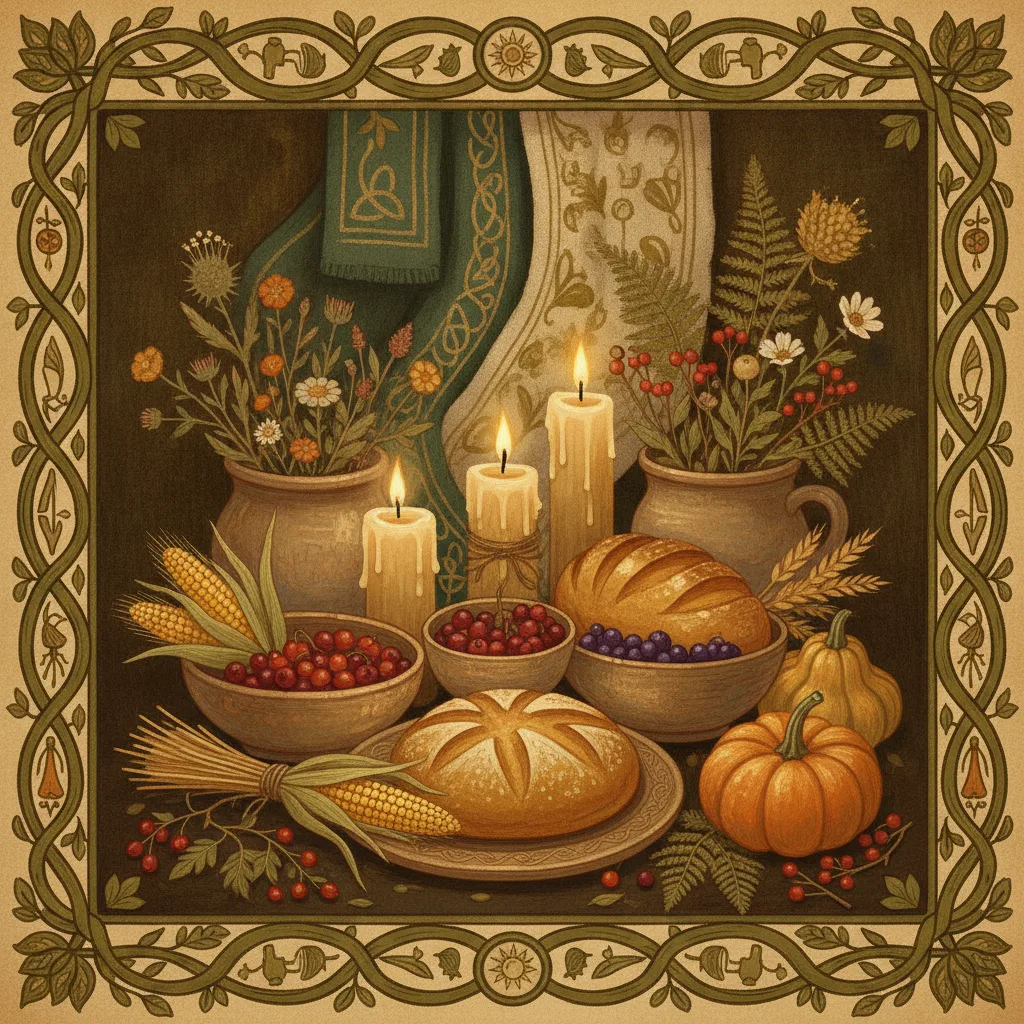
Lughnasadh (1 August) opens the harvest, named for Lugh and his foster-mother Tailtiu. Style the first harvest green-gold, not russet: cut grain, bilberries and blackberries, still-green foliage, and a home-baked loaf. The last-sheaf corn dolly is a genuinely old custom, revived in the 1950s-60s. The festival is ancient; its place on the eightfold Wheel is modern.
- Lughnasadh (1 August) opens the harvest; named for Lugh and Tailtiu.
- Style green-gold, not russet: grain, berries, still-green foliage, fresh bread.
- Lammas means loaf-mass; a home-baked loaf is the key object.
- The corn dolly is genuinely old, revived in the 1950s-60s.
- The festival is ancient; the eightfold Wheel is modern.
Of the four Gaelic fire-festivals, Lughnasadh is the one about work paying off. It falls on 1 August and opens the harvest, the first cutting of grain after the long “hungry gap” of high summer when the previous year’s stores had run low and the new crop was not yet in. That makes it a festival with a very particular emotional colour: relief, celebration, and a cautious eye on the weather. Decorating a home for it honestly means styling the first harvest, green-gold and only just begun, rather than the full russet abundance of autumn proper.
What Lughnasadh actually was
The festival is named for the god Lugh, one of the chief figures of the Tuatha Dé Danann. Irish tradition holds that Lugh founded it as a funeral feast and games in memory of his foster-mother Tailtiu, who was said to have died of exhaustion after clearing the plains of Ireland for agriculture. That origin is worth sitting with, because it makes the festival a memorial to the labour that makes farming possible, which is exactly the right spirit for a harvest.
The games Lugh established, the Áenach Tailteann, were real, long-running assemblies with athletic contests, horse racing, trading, matchmaking and storytelling. Lughnasadh was above all a communal gathering: markets, fairs and hilltop gatherings, some of which survive. The bilberry-gathering climbs of “Fraughan Sunday,” the pilgrimage of Reek Sunday up Croagh Patrick, and the Puck Fair in Killorglin all sit on or near this old Lughnasadh slot. The Christian name for the same season, Lammas (from “loaf-mass,” the blessing of bread from the first grain), tells you the same story from the other side.
Styling the first harvest: green-gold, not russet
The commonest mistake is to decorate Lughnasadh like Thanksgiving: pumpkins, deep oranges, full autumn. That is a month or two early. The first of August in these islands is late summer, grain ripening but hedgerows still green, and the palette should say so.
- Grain first. Wheat, barley, oats and rye are the literal subject of the festival. A sheaf or a simple bunch of cut cereal stems in a stoneware jug is the single most on-theme thing you can display. Barley with its long awns and oats with their open, dangling heads are especially good.
- Early fruit. Bilberries (fraughans) are the traditional Lughnasadh fruit, gathered on the hill climbs; blueberries stand in for them. Blackberries begin now too. A bowl of dark berries is both accurate and seasonal.
- Green-gold, not brown. Yellow ochre, wheat-gold, and still-green foliage, rather than the deep browns and oranges of October. Sunflowers, if you want a flower, catch the mood; so do the last of the meadow grasses gone to seed.
- Bread. If any single object belongs on a Lammas table it is a loaf, ideally home-baked from wheat flour. It ties the decorative to the edible, which is the whole point.
The corn dolly: genuinely old, honestly dated
The one piece of harvest craft worth making or buying is the corn dolly, and it deserves accurate handling. The tradition of fashioning a figure or shape from the last sheaf of the harvest is genuinely old across Britain and Ireland, tied to the belief that the “corn spirit” lived in the standing crop and was made homeless by the cutting; the last stalks were woven into a shape to house the spirit over winter, kept indoors, and ploughed back into the first furrow of the new season. In Britain the materials were mainly wheat, oats, rye and barley; in Ireland, rushes were often used.
Two honest caveats. First, the figure went by many old regional names, Cailleach, Kern Baby, Maiden, Hag, Mare, Neck, and the neat modern distinction between an old “hag” dolly and a young “maiden” is more tidily drawn in modern retellings than the messy record supports. Second, traditional straw-dolly making had largely died out by the early twentieth century with mechanised harvesting, and what most people practise today descends from a genuine 1950s–60s revival. That does not make a corn dolly fake; it makes it a revived craft, which is worth saying plainly. Buy one from a straw-craft maker or weave your own; either way, know its real history.
Old festival, recent wheel
As with its three fellow fire-festivals, Lughnasadh on 1 August is genuinely ancient and well attested. Its place as one spoke of an eight-part “Wheel of the Year,” and the fixed pairing with a specific “Lammas sabbat” liturgy, belongs to the twentieth-century synthesis rather than to old Gaelic practice. The festival is old; the wheel is modern. We date the whole calendar in The Wheel of the Year, honestly dated.
A first-harvest shelf or table, maker-first
To pull it together the sourced way, start with a heavy stoneware or earthenware vessel from a small-batch potter and fill it with real cut grain. Add a wooden board with a home-baked loaf, a bowl of dark berries, and a corn dolly or a few woven wheat plaits from a straw-craft maker. Dress with a length of naturally dyed linen from a hand-weaver in wheat-gold or undyed cream, and a beeswax candle from a small chandler. Keep the greens green: this is late summer, not autumn.
A word on scent, since a harvest home was never just visual: the smell of fresh bread, cut straw and the first blackberries is the real sensory signature of the season, and a beeswax candle with a bowl of berries does more for the mood than any bottled “harvest” fragrance. And if you keep the festival as the old communal gathering it truly was, the honest way to mark it is to share the food; a loaf broken with others beats a perfectly styled table eaten alone, because Lughnasadh was fundamentally about coming together after the labour. If you want a repeatable method for arranging any of this, our guide to building a seasonal shelf sets out the same restrained approach. Three well-made, meaningful things, grain, bread and a corn dolly, say more about the first harvest than a table groaning with out-of-season squash. Lughnasadh is a festival of relief and gratitude for work done; a home dressed for it should feel earned, generous and quietly early, with the real abundance of autumn still to come.
Frequently asked questions
What is Lughnasadh and when is it?
Lughnasadh falls on 1 August and opens the harvest, the first cutting of grain after the summer hungry gap. It is one of the four genuinely old Gaelic fire-festivals, named for the god Lugh, and Irish tradition holds he founded it as a funeral feast and games for his foster-mother Tailtiu, said to have died of exhaustion after clearing the plains for agriculture. Its Christian counterpart is Lammas, from loaf-mass, the blessing of bread from the first grain.
How should I style a home for the first harvest?
Lead with grain: cut wheat, barley or oats in a stoneware jug is the most on-theme object. Add a home-baked loaf, a bowl of dark berries such as bilberries or blackberries, and a green-gold palette rather than the russet of full autumn, because 1 August is late summer with the harvest only just begun. A corn dolly makes a fine centrepiece.
How old is the corn dolly tradition?
Fashioning a figure from the last sheaf of the harvest is genuinely old across Britain and Ireland, tied to the belief that the corn spirit lived in the standing crop; the shape housed it over winter and was ploughed back into the first furrow. But traditional straw-dolly making had largely died out by the early twentieth century with mechanised harvesting, and most practice today descends from a genuine 1950s to 60s revival. That makes it a revived craft, not a fake one, which is worth saying plainly.
What were the traditional Lughnasadh activities?
Lughnasadh was above all a communal gathering: markets, fairs, hilltop assemblies, and the athletic contests of the Aenach Tailteann founded in Tailtiu's honour, along with horse racing, trading and matchmaking. Some survivals sit on or near the old slot, including the bilberry-gathering climbs of Fraughan Sunday, the Reek Sunday pilgrimage up Croagh Patrick, and the Puck Fair at Killorglin.
Is Lughnasadh part of an ancient eightfold calendar?
The festival on 1 August is genuinely ancient and well attested, but its place as one spoke of an eight-part Wheel of the Year, with a fixed Lammas sabbat liturgy, belongs to the twentieth-century synthesis rather than old Gaelic practice. The festival is old; the wheel is modern.
