The folkloric home in ceramics and textiles
Furnishing a folkloric home in handmade ceramics and natural-fibre textiles: why handmade matters, what the motifs mean, and how to care for clay and cloth.
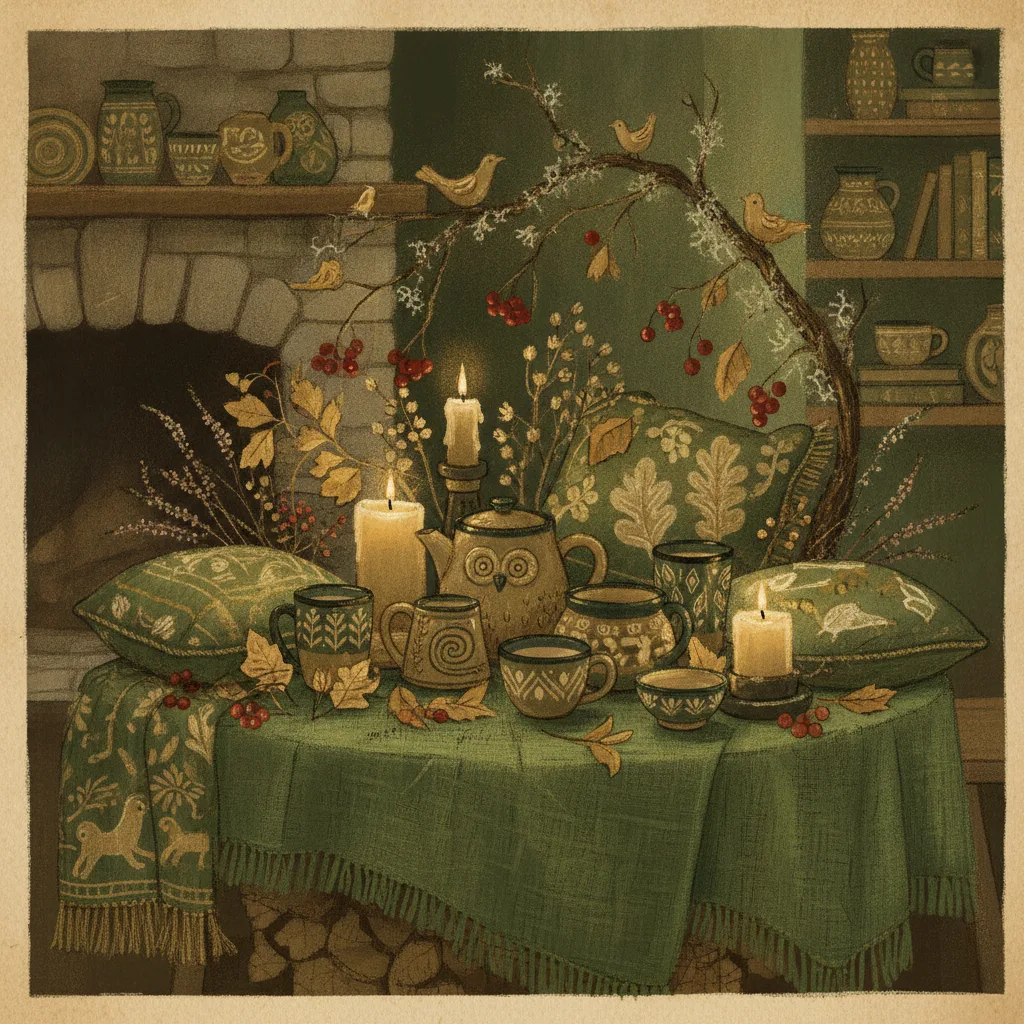
A folkloric home is furnished with handmade objects in natural materials, not themed props. Choose stoneware for everyday use, with matte glazes and honest hand-marks, and natural-fibre textiles in undyed or plant-dyed tones. Know which motifs are genuinely old: the spiral is ancient, but knotwork is medieval manuscript art. Buy maker-first, buy less, and care for it to last decades.
- Furnish with handmade objects in natural materials, not themed props.
- Stoneware suits daily use; matte glazes and hand-marks read folkloric.
- The spiral is ancient; knotwork is medieval manuscript art.
- Choose natural-fibre textiles in undyed or plant-dyed earth tones.
- Wash wool cool and flat; store clean against moth larvae.
A folkloric home is not a themed home. It is not a room dressed to look like a spell scene. It is, more simply, a home furnished the way homes were furnished before everything came flat-packed and identical: with objects made by hand, from materials that came from somewhere, carrying marks and motifs that meant something to the person who made them. Two crafts carry most of that weight in a lived-in interior: ceramics and textiles. Get those right and the rest follows.
Why handmade actually matters here
This is not snobbery about “artisan” price tags. A handmade pot and a moulded one are different objects doing different jobs. The mass-produced piece is designed to be identical to a million others and to be replaced; the handmade piece carries the evidence of a single person’s hands, a specific clay body, a particular firing. It ages into something rather than degrading into landfill.
There is a folkloric logic to this too. In the older tradition, the objects around a hearth were not anonymous. The bowl was thrown by a known potter, the blanket woven or dyed by a known hand, often locally, often to patterns that travelled through families. A folkloric home reaches back toward that: fewer things, known origins, made to be kept and mended. When you buy, buy maker-first. Ask who threw the pot, where the wool was spun, what the dye was. A maker who can answer is a maker worth supporting.
Ceramics: choosing and understanding them
For a home that gets used, stoneware is usually the sweet spot. Fired hot and dense, it is tough, water-resistant and made for everyday handling, sitting between delicate porcelain and soft earthenware. A set of stoneware bowls, a jug, a few beakers and a lamp or incense holder will carry a table and a shelf alike.
Look at how a piece is finished. A matte or softly satin glaze reads warmer and more folkloric than high gloss, and it hides the small irregularities that make handmade work handmade. Uneven pooling of glaze, a visible throwing spiral inside a bowl, a slightly wonky rim: these are not flaws, they are the signature of the hand.
It is worth thinking about what each piece is actually for, too. A folkloric home is a used one, so buy ceramics you will handle daily rather than pieces that only sit and look. A jug that pours milk, a bowl that holds the morning porridge, a beaker you actually drink from: these accumulate the small marks and associations that turn an object into something with a history. Choose colours drawn from the clay and the fire, the oatmeals, iron-speckled greys, oxblood and deep forest greens that come from mineral glazes, rather than bright synthetic tones. They will sit more easily alongside natural wood, stone and cloth.
Motifs and what they mean
Decorative marks on folk pottery and textile were rarely just pretty. Many carried protective or seasonal meaning, and it is worth knowing which of the “old” motifs are genuinely old before you cover your kitchen in them.
- The spiral is one of the deepest of all. The triple spiral, or triskele, is carved into the passage tomb at Newgrange over 5,000 years ago, long predating anything we would call “Celtic,” and is usually read as motion and the cycles of life, death and renewal.
- Interlaced knotwork is genuinely beautiful but genuinely medieval, not prehistoric. True Celtic knots first appear in early Christian manuscript art from around the 7th century, in books like the Book of Kells, and the style drew on Mediterranean and Coptic ribbon-interlace as much as on any native Celtic source. Wear it and display it, but know it as manuscript art, not druid magic.
- Sun, wheel and rosette marks recur across European folk pottery and embroidery as light-and-year symbols.
- Plant and harvest motifs (wheat, hawthorn, oak, apple) tie an object to a season and to the land it came from.
If a piece is sold to you with a grand mythic backstory, treat that as a prompt to check rather than a fact to repeat. The genuine history is almost always more interesting than the marketing version. For the tangle of what is really old versus revival, our companion piece on folklore-motif jewellery lays out the same distinctions in metal.
Textiles: the soft folkloric layer
Textiles do the warming, the softening and much of the colour in a folkloric room, and here again the fibre is the whole story. Choose natural: wool, linen, hemp, cotton.
Wool is the hearth-side material: insulating, water-shedding, warm even when damp. A heavy wool throw or a felted rug anchors a cold room. Linen and hemp, spun from flax and hemp stems, bring the crisp, cool, structural textiles: table cloths, cushion covers, curtains that soften and improve with washing. Hemp actually gets softer the more you use it. Look for plant-dyed pieces, whose colours sit together naturally because they come from the same limited earth palette, and for weaves and embroidery done by hand.
Caring for natural materials
The point of buying well is to keep things for decades, and natural materials reward a little knowledge.
Ceramics. Clean handmade pottery with a soft sponge and gentle dish soap; skip abrasive scourers, which scratch glaze. The big rule is thermal shock: never move a ceramic piece straight from fridge to hot oven or vice versa, because the sudden swing can crack the clay body. Treat handmade pieces as hand-wash where you can, and store bowls with a cloth or felt pad between stacked pieces so rims and feet do not chip each other.
Wool and other protein fibres. Wash cool and gentle, and dry flat, because heat, moisture and agitation felt the fibres permanently. The real enemy in storage is the clothes moth, or rather its larvae: adult moths do no damage, but the larvae eat wool, so store clean woollens (larvae are drawn to food and sweat traces), keep drawers well aired, and use strong natural deterrents such as cedar, lavender and rosemary rather than mothballs.
Linen, hemp and cotton. These are hardy. Wash in cool to warm water with a gentle detergent; they soften and improve with use. Dry linen and hemp out of harsh direct sun over long periods to keep colours from fading.
A quick, honest word on styling all this together: restraint is the folkloric virtue. Three well-made, well-cared-for things on a shelf carry more meaning than fifteen. If you want a method for arranging them, we set one out in our guide to building a seasonal shelf. Buy less, buy made, and keep it working.
Frequently asked questions
Why choose handmade ceramics and textiles over mass-produced?
A handmade piece carries the marks of a single maker, a specific clay body and a particular firing, and it ages into something rather than degrading into landfill. There is a folkloric logic too: older households knew who threw the bowl and wove the cloth. Buy maker-first, with known origins, made to be kept and mended.
What do folk pottery and textile motifs mean?
The spiral (and the triple spiral or triskele carved at Newgrange over 5,000 years ago) is read as motion and the cycles of life and renewal. Interlaced knotwork is beautiful but early-medieval manuscript art, not prehistoric. Sun and wheel marks read as light and year symbols, and plant motifs tie an object to a season.
How do I care for handmade ceramics?
Clean with a soft sponge and gentle dish soap, avoiding abrasive scourers that scratch glaze. Never move a piece straight from fridge to hot oven or vice versa, as thermal shock can crack the clay. Hand-wash where you can, and pad stacked bowls with cloth so rims and feet do not chip.
How do I protect wool and natural-fibre textiles?
Wash wool cool and gentle and dry flat, since heat and agitation felt the fibres permanently. Guard against clothes-moth larvae by storing clean woollens in well-aired drawers with natural deterrents such as cedar, lavender and rosemary. Linen, hemp and cotton are hardier and soften with use.
Which natural fibres suit a folkloric home?
Wool for hearth-side warmth (it insulates even when damp), linen and hemp for crisp structural cloths, curtains and cushions that improve with washing, and cotton for soft everyday textiles. Plant-dyed pieces sit together naturally because their colours come from the same limited earth palette.
