12 More Writing Prompts, This Time From Welsh and Scottish Tradition
Twelve folklore writing prompts from the Mabinogi, the Cŵn Annwn, the Cailleach, selkies and Tam Lin — each tied to a real story, with a one-line source note.
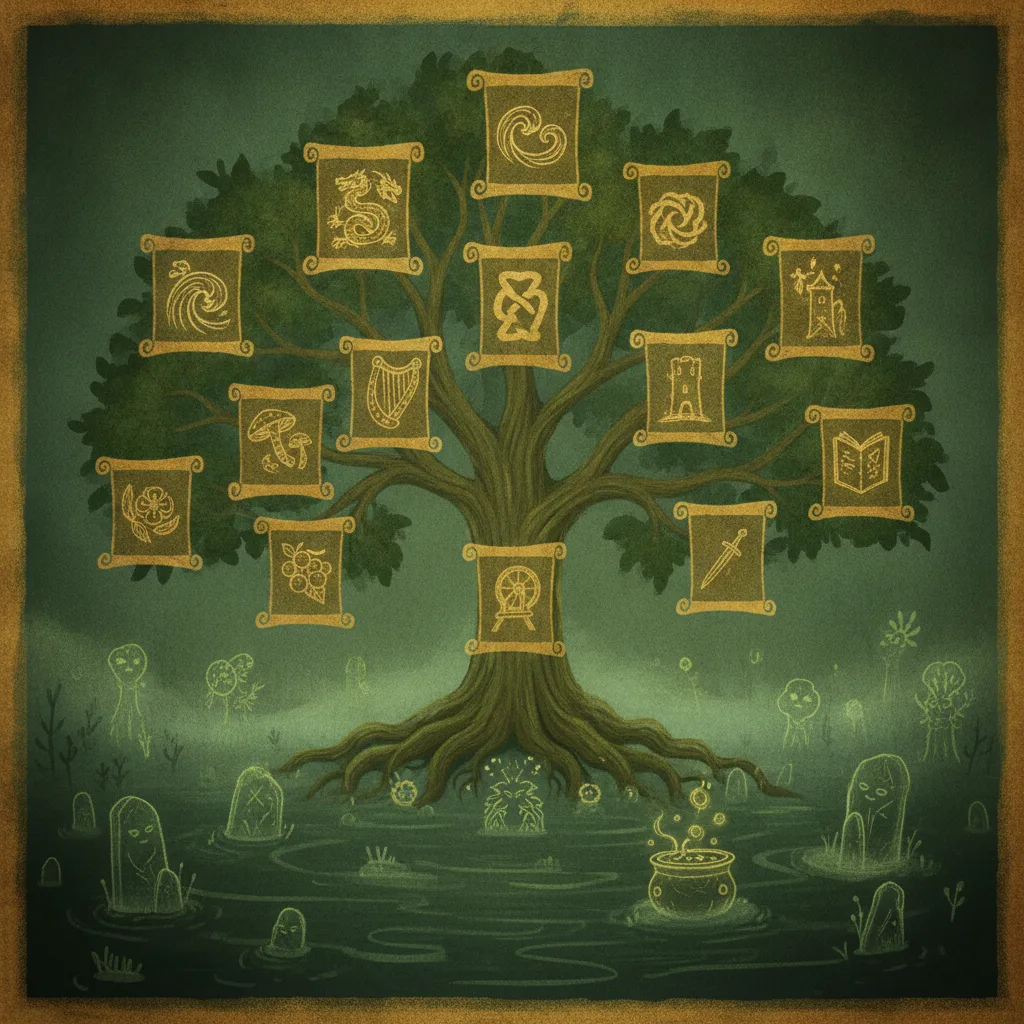
Twelve prompts from Welsh and Scottish tradition, each tied to a story so you read the source first. Welsh prompts draw on the Four Branches of the Mabinogi and the Tale of Taliesin; Scottish and Gaelic ones on the Cailleach, selkies, water-horses and the ballad of Tam Lin. Keep each tale's condition, the bargain or taboo, where the tension lives.
- Twelve prompts, each tied to a real Welsh or Scottish tale.
- Welsh prompts draw on the Four Branches and Taliesin.
- Scottish ones use the Cailleach, selkies, water-horses and Tam Lin.
- Keep each tale's condition, the bargain or taboo that grips.
- Read a full version first and note the translator.
A good writing prompt does two things at once: it hands you a spark and it points you at a well you can keep drawing from. The Welsh and Scottish traditions are unusually generous on both counts — full of pacts, transformations, stolen skins and bargains with the Otherworld that reward a writer for going back to the source. Below are twelve prompts, each tied to a real story or figure, with a one-line note on where it comes from so you can read further before you write. Treat the source as a floor, not a ceiling: know the tale, then make it yours.
If you want the wider mythic map these figures sit inside, our guide to the Good Folk and the fairy mounds is a useful companion — the boundary between the human world and theirs is the engine under most of these stories.
From the Welsh tradition
1. The year in another man’s skin
Write a character who agrees to trade places with a stranger for a year and a day — same face, same bed, same throne — and must not betray the swap even to the stranger’s wife. Source: the First Branch of the Mabinogi, where Pwyll changes shape and place with Arawn, king of Annwn.
2. Punished for a crime that never happened
A woman is accused of murdering her newborn after the child vanishes in the night, and her sentence is to sit at the gate and carry every visitor inside on her back. Write the years of that false punishment from her point of view. Source: Rhiannon’s ordeal in the First Branch of the Mabinogi.
3. The message sewn to a bird
A prisoner with no allies teaches a starling to speak, straps a letter beneath its wing, and sends it across the sea toward the one person who might come. Write the flight, or the waiting. Source: Branwen and her starling in the Second Branch of the Mabinogi.
4. The cauldron that gives back the dead — wrong
An army owns a cauldron that revives any corpse thrown into it overnight, but the revived come back mute and not quite themselves. Write the soldier who volunteers to be its first customer. Source: the Cauldron of Rebirth in the Second Branch of the Mabinogi.
5. The kingdom emptied by a mist
A fog rolls in and when it lifts, every person, animal and building is gone but your character’s household. Write their slow discovery of what — or who — is holding the land under enchantment. Source: the desolation of Dyfed in the Third Branch of the Mabinogi, resolved by Manawydan and a very unusual mouse.
6. Made from flowers, made to betray
Magicians conjure a bride out of oak, broom and meadowsweet blossom because a curse forbids the hero a human wife. Write her waking, her wanting, and what a made thing owes its makers. Source: Blodeuwedd in the Fourth Branch of the Mabinogi, later turned into an owl.
7. Swallowed, and reborn as a poet
A servant tending a cauldron of wisdom for a year and a day tastes three drops meant for another, and flees through a chase of shape-changes before being swallowed and reborn. Write the chase. Source: Ceridwen and Gwion Bach in the Tale of Taliesin.
8. The hounds with red ears
White dogs with blood-red ears course across the night sky, and to hear them is to be marked. Write the household that hears the pack pass — and the one who follows it. Source: the Cŵn Annwn, the spectral hounds of the Welsh Otherworld, first met as Arawn’s hunting pack in the First Branch.
From the Scottish and Gaelic tradition
9. The old woman who shapes the mountains
Write the winter goddess who drops boulders from her creel to make the hills, washes her great plaid in the whirlpool until the sea roars, and rules the cold half of the year until spring unseats her. Source: the Cailleach (the Cailleach Bheur), the divine hag of Gaelic Scotland and Ireland, tied to winter and the making of the land.
10. The skin in the sea-chest
A fisher hides a sealskin he found on the shore and marries the woman who came out of it; years later a child finds the skin. Write the moment she chooses. Source: the selkie legends of Orkney and Shetland, in which seal-folk shed their skins to walk as humans.
11. The horse that will not let go
A beautiful grey horse stands saddled and patient by the loch, and the children who climb onto its back find their hands stuck fast to its hide as it turns for the deep water. Write the one who did not climb on. Source: the kelpie and the deadlier each-uisge, the shape-shifting water horses of Scottish folklore.
12. Holding on through every shape
To free the man she loves from the Fairy Queen, a woman must pull him down from his horse at midnight and hold him while he turns to adder, to bear, to red-hot iron, and never let go. Write the holding. Source: the ballad of Tam Lin (Child Ballad 39).
How to use these well
The quickest way to flatten a folk tale is to keep only the monster and throw away the bargain. What makes these stories bite is almost always a condition — a year and a day, a name that must not be spoken, a skin that must not be found, a grip that must not loosen. Keep the condition and you keep the tension the tradition spent centuries tuning.
Read at least one full version before you write, and note the translator: ballads such as Tam Lin and Thomas the Rhymer survive in several variants collected in the nineteenth century, and the Mabinogi comes to us from the medieval Red Book of Hergest and White Book of Rhydderch. When you cite your spark honestly, you are not borrowing less — you are inviting your reader back to the well too.
Frequently asked questions
Where do the Welsh prompts come from?
Mostly the Four Branches of the Mabinogi (Pwyll, Branwen, Manawydan and Math) and the Tale of Taliesin, medieval Welsh prose that survives chiefly in the White Book of Rhydderch and the Red Book of Hergest.
What is the Cailleach?
A divine hag of Gaelic Scotland and Ireland, the Cailleach Bheur, associated with winter and storms and credited with shaping the landscape by dropping stones from her creel. She rules the cold half of the year.
What is a selkie?
A seal-person of Orkney and Shetland folklore who sheds its sealskin to walk in human form. In the classic tale someone hides the skin to keep the selkie on land, until it is found and they return to the sea.
What is the difference between a kelpie and an each-uisge?
Both are Scottish shape-shifting water horses. The kelpie haunts rivers and streams, while the each-uisge lives in lochs and the sea and is reckoned the more dangerous, luring riders to drown.
Are Tam Lin and Thomas the Rhymer tales or ballads?
Both survive mainly as Scottish ballads rooted in older legend, Tam Lin as Child Ballad 39 and Thomas the Rhymer as Child Ballad 37, collected in several variants in the eighteenth and nineteenth centuries.
