Folklore in poetry: from the medieval to the modern
Folklore as poetry, medieval to modern: Heaney's Sweeney Astray, Kinsella's Táin, Ní Dhomhnaill and Armitage — a faithful text versus a living re-voicing.
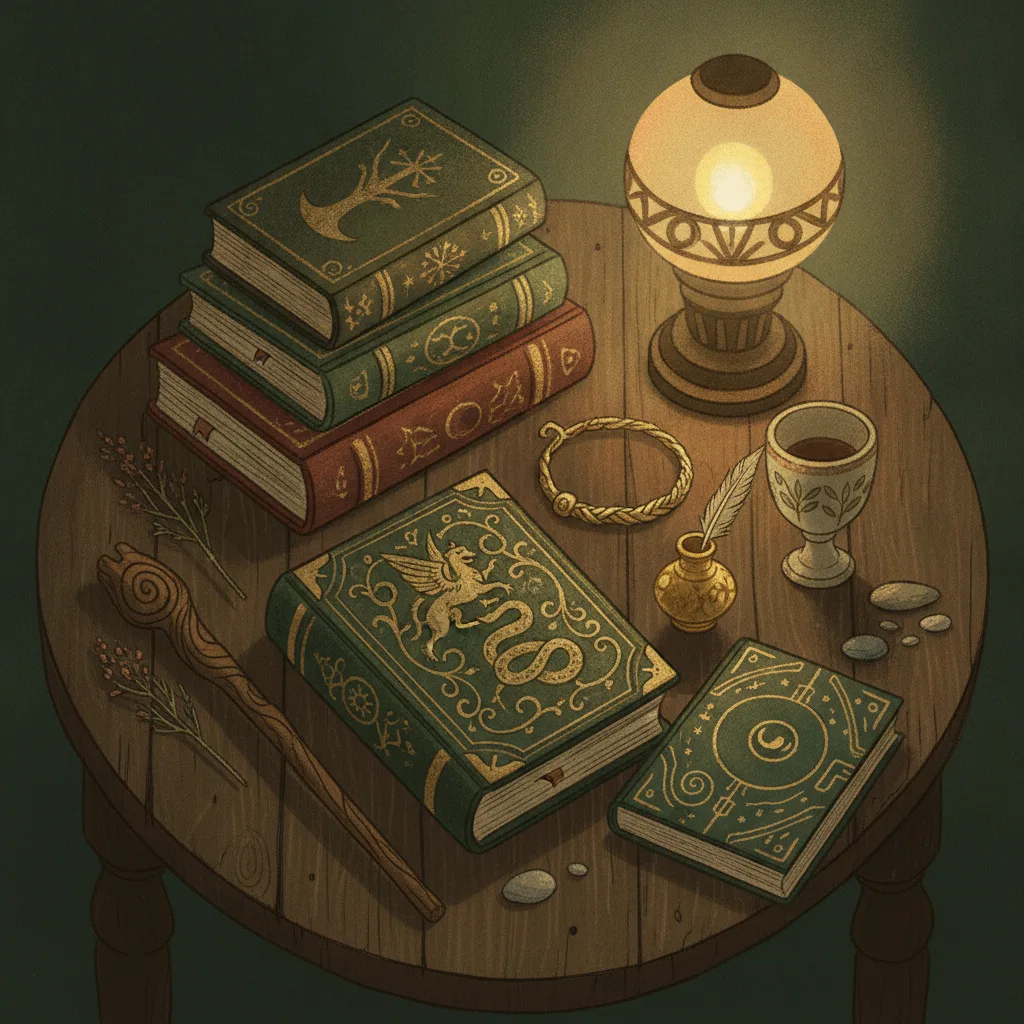
Start with Seamus Heaney's Sweeney Astray, his version of the medieval Buile Suibhne, then read O'Keeffe's edition for the original bones. Take Kinsella's The Táin for epic sweep, Ní Dhomhnaill's Pharaoh's Daughter for living Irish folklore, and Armitage's Sir Gawain for the Middle English strand.
- Heaney's Sweeney Astray re-voices the medieval Buile Suibhne as living poetry.
- O'Keeffe's edition gives the medieval Irish text with facing translation.
- Kinsella's The Táin keeps the epic's prose-and-verse shifts alive.
- Ní Dhomhnaill's Pharaoh's Daughter shows folklore still generating new poems.
- Trustworthy editions distinguish translation from version from original composition.
Before folklore was collected in prose, much of it lived as verse — chanted, sung, memorised. So it is fitting that some of the finest modern writing about the old traditions is poetry, or translation that is itself a kind of poem. This is a guide to reading folklore as poetry, from the medieval Irish and Middle English originals to the twentieth-century masters who re-voiced them. Every book below is real and identifiable, and I have tried to be clear about which are faithful scholarly texts and which are living re-imaginings, because with poetry that distinction is the whole game.
Start with the mad king: Buile Suibhne
The greatest single folklore-poem of medieval Ireland is Buile Suibhne, “The Frenzy of Suibhne”: the tale of a king cursed by a saint at the Battle of Mag Rath, driven mad, and transformed into a bird-man who flees to live in the tree-tops, speaking some of the most beautiful nature poetry in the Gaelic canon. The scholarly foundation is J. G. O’Keeffe’s edition, Buile Suibhne (The Frenzy of Suibhne), published by the Irish Texts Society in 1913 and reprinted in 1996. It gives the medieval Irish text with a facing English translation, notes and glossary. It is a study text rather than a bedside read, but it is the bedrock everything else stands on.
The great re-voicing: Heaney’s Sweeney Astray
Seamus Heaney turned that same material into one of his finest books: Sweeney Astray (Faber, 1983; ISBN 978-0-571-21009-1), the first complete English version since O’Keeffe’s. Heaney called it “a version from the Irish”, and the phrase is honest — this is not a literal crib but a poet’s re-making, in which the exiled, bird-haunted king becomes a figure for the artist adrift and for the Northern Irish predicament of the early 1980s. Read it beside O’Keeffe and you see exactly what translation-as-poetry does: the scholarship anchors the meaning, and the poet gives it a living pulse. If you buy one book from this list, this is the one.
Epic in verse and prose: Kinsella’s The Táin
The Táin Bó Cúailnge, the cattle-raid at the centre of the Ulster Cycle and the making of Cú Chulainn, is not a poem throughout, but the great modern translation reads like one. Thomas Kinsella’s The Táin (Oxford University Press; ISBN 978-0-19-280373-3) moves between plain, muscular prose and sudden passages of verse — the rosc, the dense archaic chant that erupts at moments of high tension — and Kinsella keeps that shift alive rather than smoothing it away. The Oxford edition carries Louis le Brocquy’s stark brush drawings, which suit the material perfectly. For readers coming from the primary sources, Kinsella is the version that makes the epic sing.
Living folklore: Nuala Ní Dhomhnaill
Folklore in poetry is not only a matter of translating the medieval. Nuala Ní Dhomhnaill, one of the major Irish-language poets of our time, writes new poems saturated in folk belief — the bean sí, the fairy lover, the drowned and the shape-shifted — and sets them against thoroughly modern lives. Her collection Pharaoh’s Daughter (The Gallery Press, 1990; ISBN 978-1-85235-056-7) prints forty-five of her Irish poems with English translations by thirteen distinguished poets, among them Seamus Heaney, Paul Muldoon, Ciaran Carson, Medbh McGuckian and Michael Longley. Reading it, you watch a tradition still generating new work, and the facing-page format lets you feel how much folklore lives in the sound of the Irish itself. It is the best proof on this list that the old material is not a museum.
Middle English and the fairy stranger: Armitage’s Sir Gawain
Cross the Irish Sea and the richest folklore-poem in Middle English is Sir Gawain and the Green Knight: a beheading game, a green giant who lives after losing his head, a girdle with a whisper of protective magic, all wrapped in a moral test. Simon Armitage’s verse translation (Faber, 2007; ISBN 978-0-571-22328-2) is the one to read. Armitage, himself a northern poet, chases the original’s heavy alliteration and its wintry, physical texture — you can hear the frost and the axe. He is candid that a translator must sometimes choose sound over strict sense, and he chooses well. Set beside a facing-page original (Faber’s editions provide the Middle English), it is both a pleasure and an education in how folklore and courtly romance braided together.
The public-domain giants, and how to use them
Two older poets belong on any such shelf, and both are free to read. W. B. Yeats mined Irish folklore for verse throughout his life — The Wanderings of Oisin, “The Stolen Child”, “The Song of Wandering Aengus” — and his prose gathering The Celtic Twilight sits alongside them. Read Yeats as a great poet working from folklore, not as a folklorist: he selects, heightens and mythologises, and the Ireland he conjures is partly his own invention. That is not a flaw, but it is a fact to keep in mind, and it is the same caution that applies to Lady Gregory’s verse-tinged retellings from the same Revival moment.
The folklore-accuracy question, for poetry
With poetry the honesty test shifts. You are rarely asking “is every detail attested?” — a re-voicing is meant to depart. You are asking instead: does the book tell you what it is doing? A trustworthy edition distinguishes translation from version from original composition. O’Keeffe gives you the medieval text; Heaney tells you plainly that Sweeney Astray is a version; Ní Dhomhnaill writes new poems and never pretends they are old ones. The thing to be wary of is the anthology that presents a heavily modernised paraphrase as if it were the ancient poem itself, with no note on who changed what. As ever, the seams should be visible.
A short route through
A satisfying path runs like this. Read Sweeney Astray first, for the sheer pleasure of it, then O’Keeffe to see the medieval bones beneath. Take Kinsella’s Táin for the epic sweep and its verse eruptions. Turn to Ní Dhomhnaill to hear folklore being written new, in Irish, right now. Add Armitage’s Gawain for the Middle English strand and its green, uncanny magic. Keep Yeats nearby for the Revival’s high music — enjoyed, as always, with the knowledge of how much of that twilight the poet lit himself.
Frequently asked questions
What is the best modern version of Buile Suibhne?
Seamus Heaney's Sweeney Astray (Faber, 1983), the first complete English version since J. G. O'Keeffe's 1913 edition. Heaney calls it a version, a poet's re-voicing rather than a literal translation.
Which translation of the Táin should I read?
Thomas Kinsella's The Táin (Oxford University Press), which moves between plain prose and verse and preserves the archaic chant of the original, illustrated with Louis le Brocquy's brush drawings.
Is there good modern folklore poetry, not just translations?
Yes. Nuala Ní Dhomhnaill's Pharaoh's Daughter (Gallery Press, 1990) is new Irish-language poetry steeped in folk belief, with facing English translations by thirteen poets including Seamus Heaney and Paul Muldoon.
What is the best folklore poem in English?
Sir Gawain and the Green Knight, the Middle English romance of the beheading game and the green giant. Simon Armitage's verse translation (Faber, 2007) captures its heavy alliteration and wintry texture.
How should I read Yeats's folklore poetry?
As a great poet working from folklore, not as a folklorist. Yeats selects and heightens, and the Ireland of The Celtic Twilight is partly his own creation, which is a strength to enjoy and a fact to keep in mind.
