Candles and scent for the turning year
Beeswax or soy, scenting a candle by the season, the fire festivals done honestly, and the plain safety rules that keep real flame from becoming a real fire.
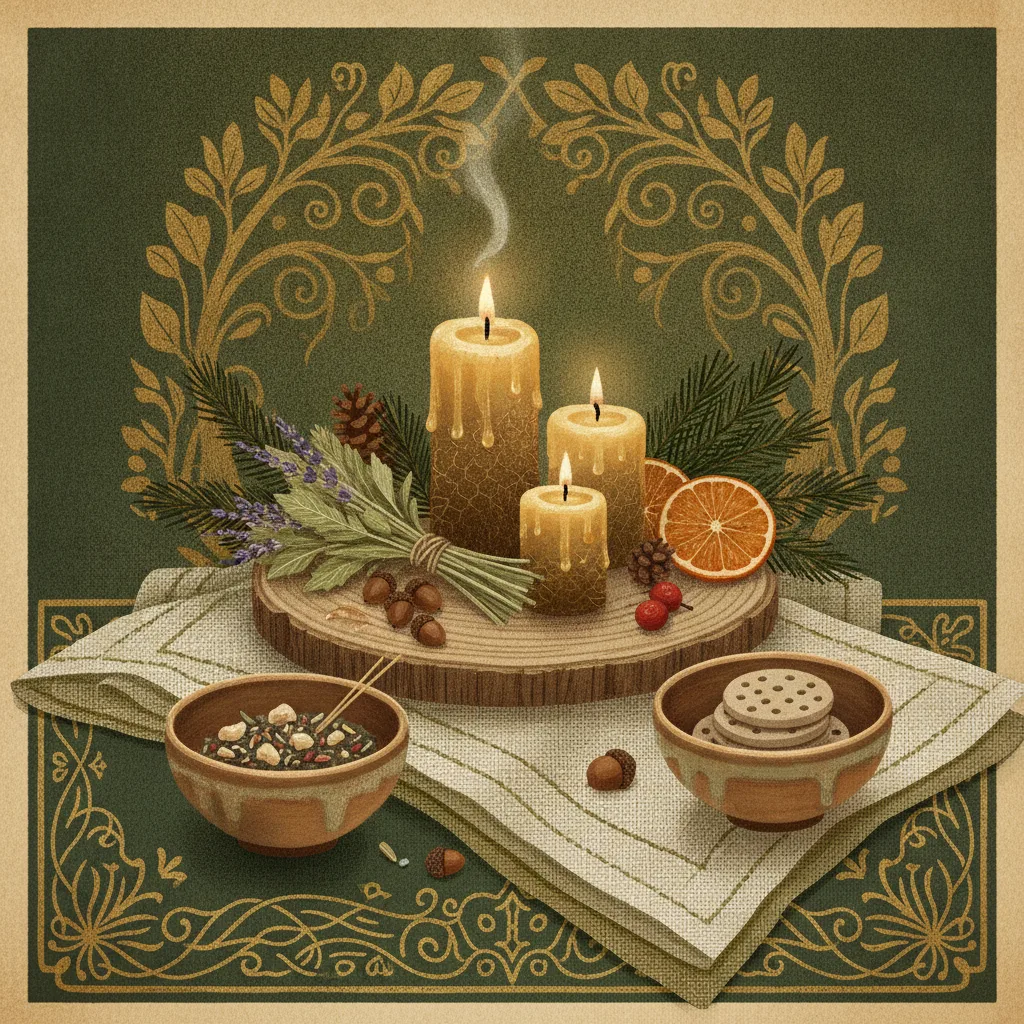
For a seasonal candle, the two decisions that matter are wax and scent. Beeswax burns slowly and cleanly with a faint honey scent but costs more; soy is cheaper, scentless and takes fragrance well. Choose a cotton or wooden wick, and let any scent follow the season. Trim the wick, get the first burn right, and never leave flame unattended.
- Beeswax burns slowly and cleanly but costs more than soy.
- Soy is cheaper and scentless, a blank canvas for fragrance.
- Choose cotton or wooden wicks over metal-cored ones.
- Let scent follow the four Gaelic fire-festivals through the year.
- Trim the wick, get the first burn right, never leave unattended.
Flame is the oldest household technology there is, and for most of the year in these islands it is also the difference between a room you want to sit in and one you don’t. If you keep any kind of seasonal shelf or altar, the candle is usually the working heart of it. So it is worth getting the two decisions that matter right: what the candle is made of, and what, if anything, it smells of. Everything else is styling.
Beeswax or soy: an honest comparison
These are the two natural waxes you will actually be choosing between, and they are genuinely different materials, not marketing variants.
Beeswax is the older of the two and, on most measures, the finer. It has a high melting point of around 63°C (145°F), so it burns slowly and a given candle lasts noticeably longer than the same size in soy. It burns very cleanly: a 2013 study in Fuel Processing Technology found beeswax has higher combustion efficiency than soy or paraffin, meaning fewer airborne particulates and virtually no soot. It carries a faint natural honey scent all on its own, which is either a feature or a complication depending on what you want to add to it. The catch is cost: beeswax is a by-product of beekeeping and there is only so much of it, so it is the more expensive wax by some margin.
Soy wax is made from hydrogenated soybean oil. Its melting point is lower, around 49°C (120°F), so it burns faster and cooler, and it is considerably cheaper. It has no scent of its own, which makes it a blank canvas for fragrance. It is cleaner than paraffin but not quite as clean-burning as beeswax, and because it is soft it is more prone to burning unevenly if the wick is wrong.
A practical rule of thumb: choose beeswax for a long-burning, scent-light candle you will light again and again through the dark months, and soy where you want a strongly scented candle or you are lighting a lot of them and cost matters. Whichever you pick, look for a cotton or wooden wick rather than a metal-cored one, which can release traces of heavy metals as it burns.
Scent through the turning year
You do not have to scent a candle at all; unscented beeswax in a dark room is a complete experience. But if you like scent, let it follow the season rather than fighting it. The trick is to reach for notes the land is actually producing at that point in the year.
- Late winter into early spring (around Imbolc, 1 February): the first green things. Snowdrop is scentless, so think milk-and-oat warmth, beeswax itself, a whisper of early herbs. This is the hearth-and-thaw end of the palette, not floral yet.
- Spring into early summer (around Beltane, 1 May): hawthorn (the may blossom), lilac, cut grass, sweet woodruff. Green and heady.
- High summer and harvest (around Lughnasadh, 1 August): meadowsweet, ripe grain, warm straw, the first orchard fruit.
- Autumn into the dark (around Samhain, 1 November): apple and sloe, woodsmoke, dry leaf, resin and beeswax again. This is the deepest, warmest end of the year’s scent.
Those four dates are not arbitrary. Imbolc, Beltane, Lughnasadh and Samhain are the four Gaelic fire festivals, the cross-quarter days falling roughly halfway between the solstices and equinoxes, and fire is central to all of them. If you want to tie scent to the calendar honestly, that is the frame to hang it on.
Fire and the festivals: keeping it accurate
It is worth being careful here, because a lot of candle marketing plays fast and loose with “ancient Celtic” claims. Two things are true and worth separating. First, the fire festivals are genuinely old: Beltane and Lughnasadh appear in medieval Irish literature, and Samhain is attested as a threshold festival of the darkening year (we cover what it actually involved in Samhain: what it actually was). Lighting a flame to mark these turnings sits squarely within that tradition.
Second, the tidy eight-spoked “Wheel of the Year” that groups them with the solstices and equinoxes is a modern synthesis, assembled in the mid-twentieth century, not an unbroken ancient calendar. The individual festivals are old; the wheel that frames them is recent. You can absolutely light a candle for Imbolc and feel connected to something deep, as long as you do not tell yourself a false story about it. Imbolc’s link to Brigid, for instance, is real and layered, and we unpick it in our piece on Brigid.
Candle safety, plainly
None of this matters if you burn your house down, and real flame demands real respect. The rules are short and boring and worth following every single time.
- Trim the wick to about 6mm (a quarter inch) before every burn. This is the single most effective thing you can do. A long wick is what causes a smoking flame and black soot up the glass.
- Get the first burn right. On the first lighting, leave it burning long enough for the whole top surface to melt to a full, even pool right to the edge. Wax has “memory”: if you snuff it early the first time, it will tunnel down the middle and waste the outer wax forever after.
- Never leave a lit candle unattended, and keep it well away from anything that can catch: dried grasses, greenery, cloth, paper. A seasonal shelf is full of exactly these things, so mind the gap.
- Keep flames out of draughts, which make them gutter, smoke and burn unevenly.
- Sit candles on a heatproof, stable base, and stop burning a container candle when about 1cm of wax is left, before the flame reaches the base.
Buying maker-first
As with everything on this site, the honest version is small-scale. Look for independent chandlers who will tell you their wax and their wick without being asked, who scent with essential or naturally derived oils rather than a wall of undisclosed fragrance, and who do not drape their labels in vague “ancient ritual” copy they cannot back up. A plain beeswax taper from a beekeeper who also runs a few hives is worth ten mass-produced “witchy” candles in a jar. Light it, trim it, mind it, and let it do the oldest job in the house.
Frequently asked questions
Is beeswax or soy the better candle wax?
Beeswax burns longer and cleanest, with virtually no soot and a faint natural honey scent, but it is the more expensive wax. Soy is cheaper, cooler-burning and scent-free, making it a good blank canvas for fragrance. Choose beeswax for long scent-light burns and soy for strongly scented or high-volume use.
How should I scent candles through the year?
Follow what the land produces: milk, oat and beeswax warmth near Imbolc; hawthorn, lilac and cut grass near Beltane; meadowsweet, grain and orchard fruit near Lughnasadh; and apple, sloe, woodsmoke and resin near Samhain. Let scent follow the season rather than fight it.
Are the fire festivals ancient?
The four Gaelic fire festivals (Imbolc, Beltane, Lughnasadh and Samhain) are genuinely old and appear in medieval Irish literature. But the tidy eight-spoked Wheel of the Year that groups them with the solstices and equinoxes is a modern twentieth-century synthesis, not an unbroken ancient calendar.
What are the essential candle safety rules?
Trim the wick to about 6mm before every burn; on the first lighting let the whole top surface melt to the edge to prevent tunnelling; never leave a flame unattended, especially near dried grasses or greenery; keep candles out of draughts and on a stable heatproof base; and stop burning before the flame reaches the base.
What should I look for when buying candles maker-first?
Independent chandlers who tell you their wax and wick without being asked, use cotton or wooden wicks rather than metal-cored ones, scent with essential or naturally derived oils, and avoid vague ancient-ritual marketing they cannot back up. A plain beeswax taper from a beekeeper beats a jar of mass-produced witchy candle.
