A reading nook for the mythically minded
Building a reading nook for the folklore-minded: warm 2700K light, natural-fibre textiles, books grouped as a working library, and very few real objects.
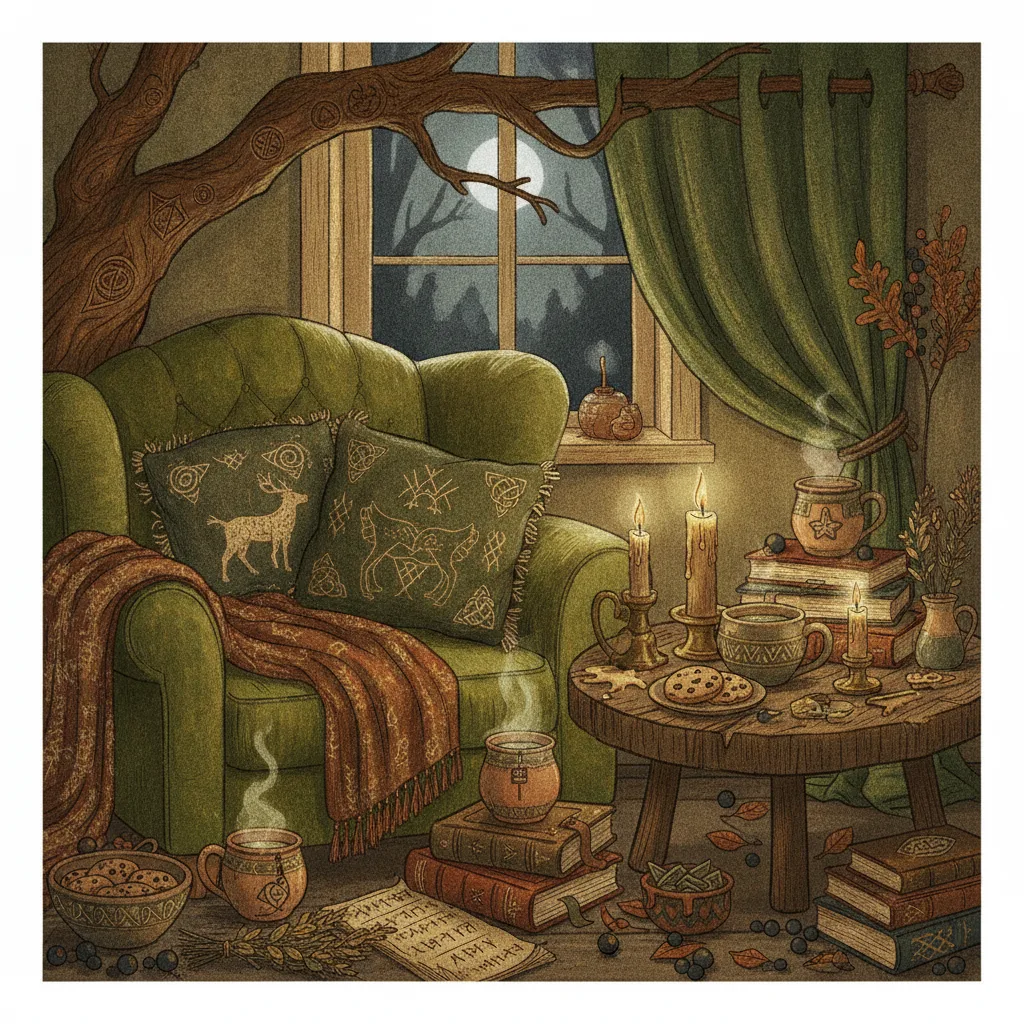
Build a reading nook by getting the light right first: warm 2700-3000K directional light for the page, plus gentle ambient light and a beeswax candle for mood. Add a comfortable chair layered with natural-fibre wool and linen in a plant-dye palette, group books by tradition as a working library, and add only a few real, meaningful objects.
- Get light right first: warm 2700-3000K, directional for the page.
- Add gentle ambient light and a beeswax candle for mood.
- Choose a comfortable chair layered with natural-fibre wool and linen.
- Group books by tradition, not colour, as a working library.
- Choose a few real, meaningful objects over mass-produced props.
A reading nook is the most personal room-within-a-room there is, and for anyone whose shelves lean toward folklore, myth and the old stories, it can be more than a comfortable chair. Done well, it becomes a small, working library that holds its subject in its bones without tipping into theme-park décor. The trick, as ever on this site, is to let good materials and honest objects do the work, and to buy made rather than staged.
Start with the light, because it decides everything
Before the chair, before the shelf, get the light right, because a reading nook that hurts your eyes will not be used. The single most useful fact is colour temperature. For leisure reading, warm white light in the 2700K to 3000K range is the accepted sweet spot: it is gentle on the eyes, encourages you to linger, and, being low in blue light, does far less to suppress melatonin in the evening than cooler “daylight” bulbs. For a nook you will use at night, 2700K is the kinder choice.
Position matters as much as temperature. You want a dedicated, directional reading light, a floor lamp arcing over the shoulder, or a table lamp beside the chair, throwing light onto the page rather than into your eyes, plus a little gentle ambient light in the rest of the room so the page is not a bright island in the dark. That contrast, not the reading itself, is what tires eyes.
For the mood, and for the oldest reading light of all, keep a beeswax candle or two from a small chandler nearby. Beeswax burns slowly and gives a warm glow close to natural sunlight; it will not replace your lamp for actual reading, but for the last chapter of the night it is unmatched, and it ties the nook to the long history of reading by candlelight without any pretence.
One practical note on placement: if you can, site the nook near a window for daytime reading, but at a slight angle to it rather than facing straight out, so daylight falls across the page instead of glaring behind it. A window seat is the classic solution for exactly this reason, and it comes with the bonus of somewhere to look up and rest the eyes between chapters, which matters more for long reading sessions than any amount of clever décor.
The chair and the textiles
Comfort is non-negotiable, so start with a chair you can genuinely sit in for an hour: a wingback, a deep armchair, or a window seat with a real cushion. Then layer it the folkloric way, with natural fibres that improve with use.
- Wool is the hearth-side fibre: insulating, warm even when slightly damp, and the right weight for a throw over the knees. A heavy wool blanket from a small weaving mill or an independent weaver anchors the whole nook.
- Linen and hemp bring the cool, structural layer: cushion covers and a loose seat throw that soften with every wash. Look for plant-dyed pieces, whose colours sit together naturally because they come from the same limited earth palette.
- A sheepskin underfoot or over the arm adds warmth and a little of the old, rough, hall-and-hearth feel without a single printed rune in sight.
Keep the palette to what natural dyes and undyed fleece actually give: cream, oatmeal, soft madder red, weld yellow, woad and indigo blue, heathered greys. We go deeper into that dye story in the folkloric home in ceramics and textiles, and the same restraint applies here.
The shelf: let the books be the decoration
For a mythically minded nook, the books are the theme, so treat them as such rather than burying them under ornaments. A few honest principles:
- Group by tradition, not colour. Keep your Irish material together, your Welsh Mabinogi editions together, your folk-tale collections, your folk-horror. It makes the shelf a working reference and quietly signals a serious reader. If you are still building the core, our guides to where to start with Irish mythology non-fiction and the four cycles of Irish myth are the backbone.
- Face a few outward. A single beautiful cover or a good folklore-illustration edition displayed face-on breaks the run of spines and gives the eye somewhere to rest.
- Leave room to grow, and to breathe. A shelf packed to bursting reads as storage; a shelf with a little air reads as a collection.
Objects, chosen with restraint
This is where a folklore nook can go wrong, so the rule is simple: one or two real, made objects, each of which means something to you, beat a dozen mass-produced “mystical” props. Think a hand-thrown mug from a small-batch potter for the tea, a piece of folklore-motif work you understand the history of, a single piece of framed public-domain manuscript art, or a bowl of seasonal foraged material that changes through the year. If you want a method for arranging even this handful, our guide to building a seasonal shelf transfers directly: odd numbers, varied heights, one focal point, and negative space that lets each thing be seen.
Resist the printed-rune cushion and the plastic “spell book.” A reading nook for someone who takes the old stories seriously should look like it belongs to someone who has read them, not someone who bought the boxed set of the aesthetic.
The small comforts that make it a habit
Finally, the practical furniture of actually reading there: a small side table within arm’s reach for a mug and the current book; a way to keep a stack of “next” books close so choosing one is easy; a footstool if the chair needs it; and a blanket always to hand. If you read at night, a candle for atmosphere and a proper 2700K lamp for the page, never one doing both jobs.
Assembled this way, warm directional light, natural fibres in a plant-dye palette, books grouped as a working library, and a very few real objects, a reading nook becomes a place you return to rather than a corner you photograph once. It holds the old stories the way the stories themselves prefer: quietly, accurately, and with room to sit down.
Frequently asked questions
What is the best light for a reading nook?
For leisure reading, warm white light in the 2700K to 3000K range is the accepted sweet spot: gentle on the eyes and, being low in blue light, far less disruptive to evening melatonin than cooler daylight bulbs. For a nook used at night, 2700K is the kinder choice. Use a dedicated directional light onto the page plus a little gentle ambient light in the rest of the room, since it is the contrast, not the reading, that tires eyes.
Which textiles suit a folkloric reading nook?
Natural fibres that improve with use. Wool is the hearth-side fibre, warm even when slightly damp, ideal for a heavy throw. Linen and hemp bring the cool, structural layer for cushions and covers, softening with every wash. A sheepskin adds warmth underfoot. Keep the palette to what natural dyes and undyed fleece give: cream, oatmeal, madder red, weld yellow, woad and indigo blue, and heathered greys.
How should I arrange the bookshelf?
Let the books be the decoration. Group by tradition rather than colour, keeping Irish, Welsh and folk-tale material together so the shelf works as a reference. Face a few beautiful covers outward to break the run of spines, and leave a little air so it reads as a collection rather than storage.
How do I avoid the nook looking like a costume?
Restraint. One or two real, made objects you understand beat a dozen mass-produced mystical props: a hand-thrown mug, a piece of folklore-motif work whose history you know, a single framed piece of public-domain manuscript art, or a bowl of seasonal foraged material. Skip printed-rune cushions and plastic spell books; the nook should look like it belongs to someone who has read the stories.
Can I read by candlelight?
A beeswax candle gives a warm glow close to natural sunlight and is lovely for the last chapter of the night, but it should not replace a proper lamp for sustained reading. Keep a 2700K reading lamp for the page and the candle for atmosphere, never one doing both jobs.
