Amulets and talismans: folklore protection vs modern jewellery
Amulet versus talisman, and which folk-protection charms are genuinely old (iron, rowan, hag stones) versus the invented "ancient meanings" of modern jewellery.
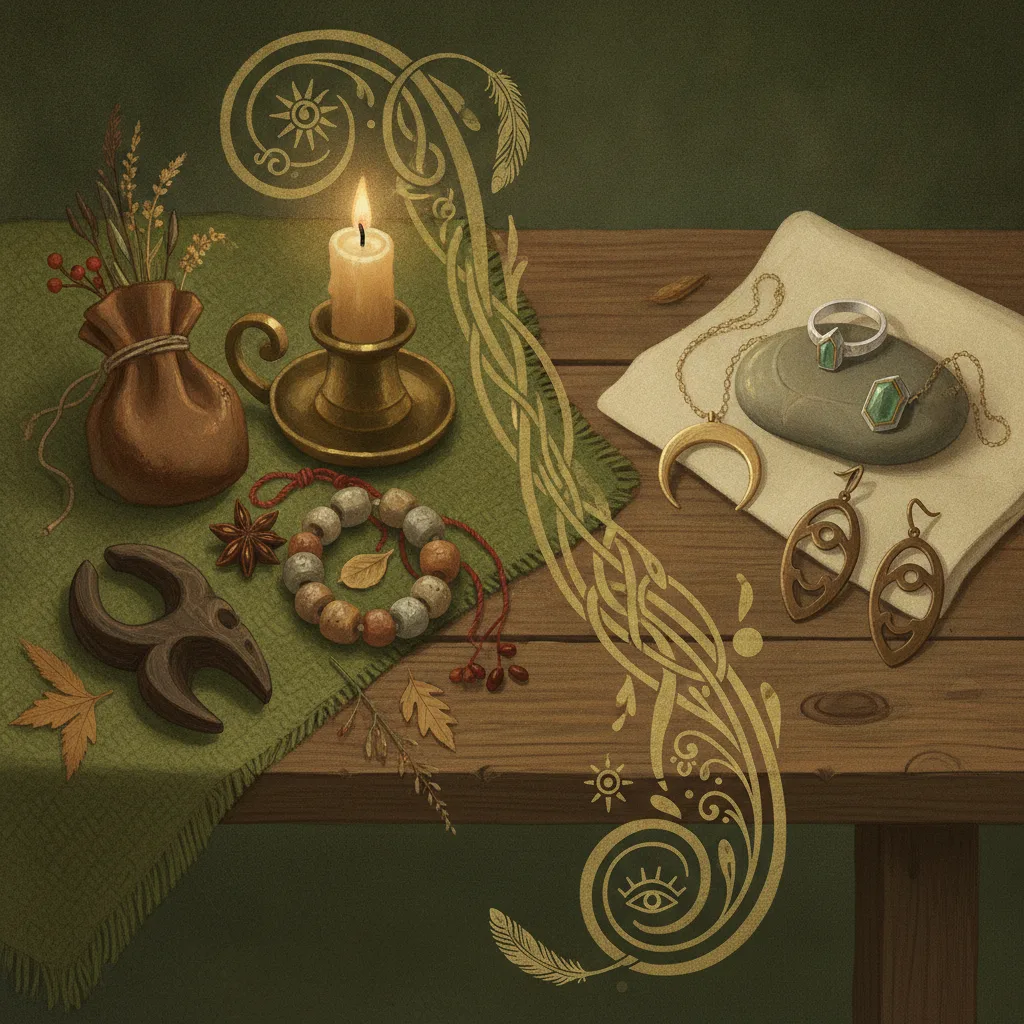
An amulet repels harm; a talisman (from Greek telesma) attracts benefit. Genuinely traditional European protections include iron and the horseshoe, rowan-and-red-thread crosses, holed hag stones, red thread and coral. Tidy crystal correspondence charts and symbols with invented ancient meanings are largely modern. Wear protection knowingly: go genuinely traditional, or buy modern and admit it.
- Amulet repels harm; talisman attracts benefit; the words differ.
- Iron, horseshoe, rowan-and-red-thread, hag stones and coral are genuinely traditional.
- Crystal correspondence charts are a modern, largely twentieth-century synthesis.
- Knotwork is medieval manuscript art, not a prehistoric druidic ward.
- Recent is not worthless; the objection is false dating, not newness.
Protective jewellery is one of the oldest reasons humans made ornaments at all, and it is also one of the most heavily marketed corners of the modern “spiritual” trade. Between those two facts sits a lot of confusion, with genuinely old folk objects and freshly invented “ancient meanings” sold side by side, often on the same stall. If you want to wear something protective and mean it, the honest first step is to know which traditions are actually old, which words mean what, and where the modern invention begins.
Amulet and talisman: not the same word
The two terms are used interchangeably now, but they carry a real, useful distinction. An amulet is protective: it is worn to repel harm, ward off the evil eye, illness, bad luck, malign spirits. A talisman is active: it is made to attract or channel a benefit, and the word comes from the Greek telesma, a consecrated or sacred object. The neat summary folklorists use is that the two are two sides of one coin, the amulet repels what is baneful, the talisman impels what is beneficial.
There is a second real difference. Amulets were very often found or natural objects, a holed stone, a plant, a piece of iron, valued for what they inherently were. Talismans were typically deliberately crafted, often inscribed or “charged” with intent at a particular time. Knowing which you mean sharpens both your language and your buying.
What is genuinely traditional
A good deal of European folk protection is well documented and consistent across regions. These are the real ones:
- Iron. Cold iron is one of the most widespread protective materials in these islands, held to repel fairies and witches alike. It underlies the horseshoe, used very widely against the evil eye, traditionally hung with the points up. Iron’s protective reputation connects directly to the Good Folk, who were said to shun it.
- Rowan and red thread. A small equal-armed cross of rowan twigs bound with red thread, carried in a pocket or hung, is a genuine and well-attested charm against the evil eye and witchcraft. The rhyme “rowan tree and red thread” records it. Rowan’s protective role turns up across the year, including at Beltane.
- The hag stone. A naturally holed stone, hung by the bed or the byre, was believed to guard against being “hag-ridden” (afflicted by nightmare) and against being taken by spirits. It is a perfect example of the found, natural amulet.
- Red thread and red generally. Wearing a thin red string as protection against the evil eye is a widespread folk custom across several cultures, including a well-known Jewish one; the colour itself carried protective force.
- Coral, especially for children. Red coral was a common protective charm for infants across the Mediterranean and Europe, hung on cradles and worn.
These share a logic worth noticing: most are natural materials or very simple made objects, and their power was believed to be inherent or conferred by long custom, not by a printed correspondence chart.
Where the modern invention starts
Now the honest part. A large share of what is sold today as “ancient protective jewellery” is recent, and some of it is invented outright. A few clear flags:
- Neat crystal “correspondence” charts. The idea that a specific gemstone reliably delivers a specific spiritual effect, this stone for protection, that one for love, is overwhelmingly a modern, largely twentieth-century and New Age synthesis, not an unbroken ancient system. Stones have genuine folklore, but the tidy master-list is new. We cover the honest side of stones, as minerals and as an ethical trade, in crystals as mineralogy.
- Symbols with invented backstories. Many “Celtic protection symbols” sold today are modern designs or medieval motifs given freshly minted meanings. Knotwork, for instance, is genuinely beautiful but genuinely medieval, first appearing in early Christian manuscript art around the seventh century, not a prehistoric druidic ward. We separate the real from the revival in folklore-motif jewellery.
- “Charged,” “activated” or “cleansed” claims. These describe a modern devotional practice, which is fine as living tradition, but they are not evidence of antiquity, and they are often simply a sales device.
None of this means modern protective jewellery is worthless. It means the honest position is to call new things new. A contemporary maker producing a beautiful piece inspired by folk motifs is doing something legitimate; the problem is only the false pedigree.
It is worth adding that “recent” is not the same as “worthless,” and folklore itself proves the point. Traditions have always grown: the rowan-and-red-thread charm, the horseshoe over the door, even the widespread red string, were all new once, adopted because they meant something to the people who used them. The objection is never to newness as such; it is to false dating, to selling a twentieth-century idea as a druidic one. A charm you adopt today, knowing it is yours and modern, stands in a perfectly respectable folk lineage. A charm sold to you with an invented five-thousand-year pedigree does not.
How to wear it honestly
You can wear protective jewellery with a completely straight face if you do it knowingly. Two good routes:
Go genuinely traditional. A plain iron nail-pendant or a small iron charm, a rowan-and-red-thread cross, a holed stone on a cord, a simple red thread at the wrist. These are real folk objects with documented histories, and they cost very little. Made by a blacksmith or a small metalworker, an iron piece in particular is both authentic and quietly striking.
Or buy modern, and know it. Choose a contemporary piece from an independent silversmith or jeweller because you like it and understand what its motif actually is and when it dates from. Enjoy it as good, meaningful modern craft rather than as a relic. That is a maker-first purchase you can defend.
What to avoid is the middle ground the market pushes hardest: a mass-produced pendant sold with a fabricated “ancient meaning” and a laminated card of powers. If a piece comes with a grand mythic backstory, treat that as a prompt to check rather than a fact to repeat, because the genuine history is almost always more interesting than the marketing version. Worn with that knowledge, an amulet does what amulets have always really done: it carries meaning you have chosen, in a material you trust, for reasons you can actually say out loud.
Frequently asked questions
What is the difference between an amulet and a talisman?
An amulet is protective: worn to repel harm, the evil eye, illness or bad luck. A talisman is active: made to attract or channel a benefit, from the Greek telesma, a consecrated object. Folklorists summarise them as two sides of one coin, the amulet repelling what is baneful, the talisman impelling what is beneficial. Amulets were often found or natural objects; talismans were typically deliberately crafted and charged with intent.
Which protective charms are genuinely traditional?
Well-documented European examples include cold iron, which underlies the horseshoe hung with points up; a small equal-armed cross of rowan twigs bound with red thread against the evil eye and witchcraft; the hag stone, a naturally holed stone hung by the bed against being hag-ridden; a thin red string worn against the evil eye; and red coral, a common protective charm for infants. Most are natural materials or simple made objects whose power was held to be inherent or conferred by long custom.
Are crystal correspondence charts an ancient system?
No. The tidy idea that a specific gemstone reliably delivers a specific spiritual effect, this stone for protection, that one for love, is overwhelmingly a modern, largely twentieth-century and New Age synthesis, not an unbroken ancient system. Individual stones have genuine folklore, but the master correspondence list is recent.
Are Celtic protection symbols ancient?
Many sold today are modern designs, or medieval motifs given freshly minted meanings. Knotwork, for example, is genuinely beautiful but genuinely medieval, first appearing in early Christian manuscript art around the seventh century, not a prehistoric druidic ward. If a piece comes with a grand mythic backstory, treat that as a prompt to check rather than a fact to repeat.
How can I wear protective jewellery honestly?
Two good routes. Go genuinely traditional with a documented folk object, an iron charm from a blacksmith, a rowan-and-red-thread cross, a holed stone on a cord, a red thread at the wrist. Or buy a contemporary piece from an independent maker because you like it and understand what its motif is and when it dates from, enjoying it as good modern craft. Avoid the mass-produced pendant sold with a fabricated ancient meaning; the objection is to false dating, not to newness itself.
