Small-maker gifting for folklore lovers
Gifting for a folklore lover the maker-first way: real craft over themed merchandise, right book editions, honest jewellery, and gifts of skill and season.
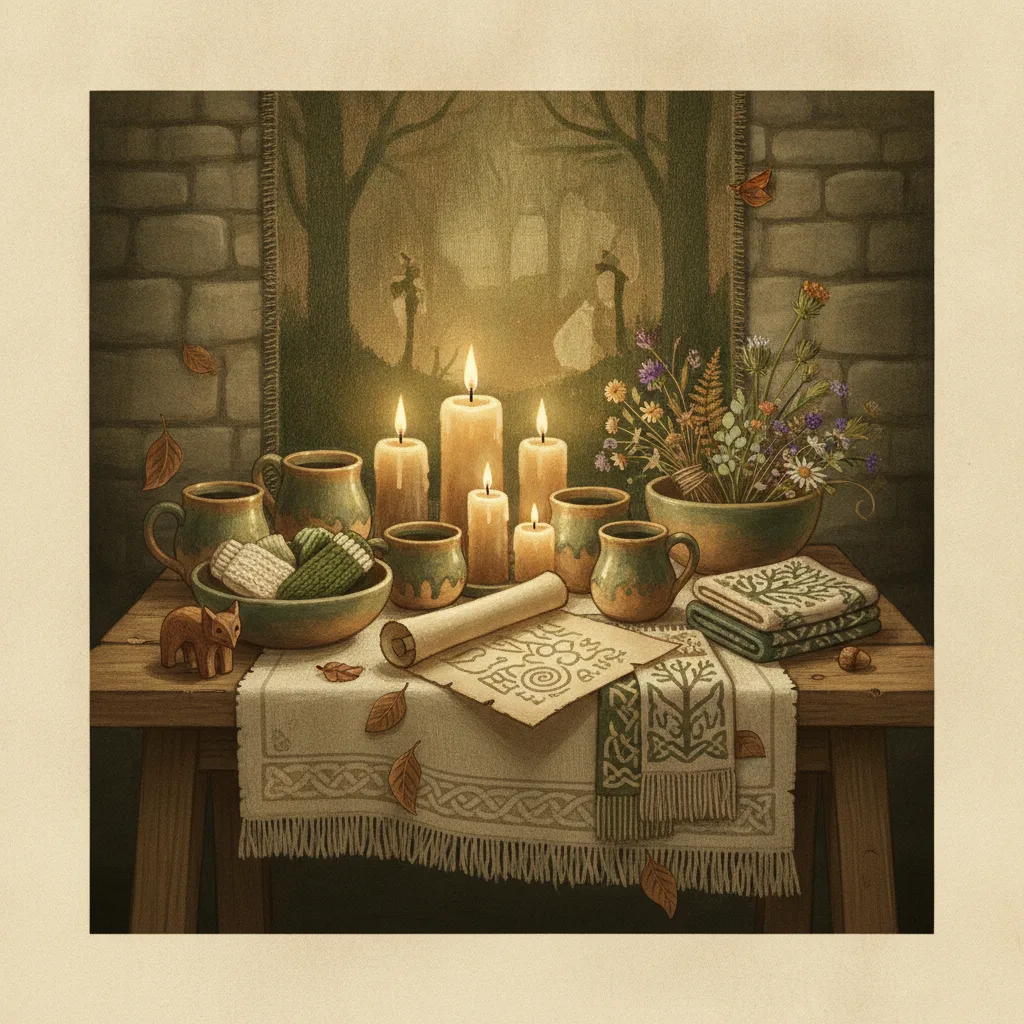
Gift a folklore lover by buying the craft, not the theme: choose well-made objects from small makers in real traditional crafts rather than mass-market Celtic or witchy merchandise with invented symbols. Hand-thrown ceramics, natural-fibre textiles, well-chosen book editions, honestly-rooted jewellery, raw craft materials, or an experience all beat novelty stock.
- Buy the craft, not the theme; real materials beat invented symbols.
- Hand-thrown ceramics and natural-fibre textiles suit the folkloric home.
- For readers, the right edition matters more than the cover.
- Choose jewellery whose motif is genuinely old, or honestly modern.
- Order early from small makers; an experience or workshop also works.
Buying a gift for someone who loves folklore is easy to get slightly wrong. The mass market is full of “Celtic” and “witchy” merchandise that a genuinely knowledgeable recipient will clock instantly as costume: invented symbols, fabricated backstories, plastic pretending to be old. The good news is that the alternative is not only more honest but usually more beautiful and better made, because it comes from small makers who actually work in the relevant crafts. Here is how to gift for a folklore lover the sourced, maker-first way, whatever your budget.
The one rule: real craft over themed merchandise
The single most useful principle is to buy the craft, not the theme. A hand-thrown mug from a small-batch potter says more to a folklore lover than a mug printed with a made-up rune, because the object itself carries the values they care about: made by a person, in a real material, to be kept. This reframes gift-buying entirely. Instead of searching for “folklore gifts,” you look for excellent small makers in a handful of traditional crafts and choose pieces whose form or motif is honestly rooted. Everything below follows from that.
For the home and hearth
The folkloric home runs on natural materials and handmade objects, so this is fertile gifting ground.
- Hand-thrown ceramics from a small-batch potter: a mug, a bowl, a jug. Look for simple folk forms and, if decorated, motifs that are genuinely old, spirals and interlace, rather than invented sigils. Our piece on the folkloric home in ceramics and textiles explains which marks are actually old.
- Natural-fibre textiles from an independent weaver or small mill: a plant-dyed wool throw, a linen table cloth, a felted rug. These are the fibres and the plant-dye palette a folkloric home is built on, and they last decades if cared for.
- Beeswax candles from a small chandler: a genuinely useful gift that ties to the fire and light customs running through every festival of the year, and beeswax burns slowly with a warm, near-sunlight glow.
- A seasonal shelf starter: a beautiful vessel plus a subscription to the idea of dressing it through the year. Pair a jug with our guide to building a seasonal shelf and you have given both an object and a practice.
This approach also solves the perennial problem of the recipient “who has everything.” A folklore lover with full shelves rarely has too many genuinely well-made everyday objects, and a hand-thrown mug they reach for daily will outlast and out-mean a novelty ornament that sits in a drawer. When in doubt, choose the useful made thing over the decorative themed one.
For the reader
Most folklore lovers are readers, and a well-chosen book is almost impossible to get wrong if you buy the right edition rather than the prettiest cover.
- A serious primary source or a good scholarly retelling. Edition matters enormously here; a bad translation sours a great text. Our guides to where to start with Irish mythology non-fiction and which edition of the Mabinogi to buy exist precisely to make this a safe purchase.
- Folk-horror and folklore fiction for the shelf, if their taste runs to the eerie; we keep a vetted list in folk-horror and folklore fiction worth your shelf.
- A folklore-illustration edition, an Arthur Rackham or a well-illustrated collection, doubles as a beautiful object as well as a book.
Second-hand and antiquarian copies are especially good gifts here: an old, well-made edition of a folk-tale collection has exactly the kind of quiet age a mass-market gift can only imitate.
For the one who wears it
Jewellery and clothing are lovely gifts if you dodge the invented-heritage trap. Buy from an independent silversmith, metalworker or dyer, and choose a piece whose motif is genuinely old, or one that is honestly modern and simply beautiful. A brooch, cloak-pin or torc from a small metalworker; a plant-dyed wool shawl or scarf from an independent dyer; a genuinely traditional protective charm such as an iron piece from a blacksmith or a rowan-and-red-thread token. What to steer clear of is the mass-produced pendant sold with a fabricated “ancient meaning.” Our guides to folklore-motif jewellery and amulets and talismans will tell you which is which before you buy.
For the maker and the seasonal keeper
Some of the best gifts support the recipient’s own craft rather than adding to their shelves:
- Raw materials for a craft they practise: good undyed wool for a knitter or spinner, natural-dye materials for a dyer, fresh rushes or straw for someone who makes rush crosses or corn dollies.
- A single beautiful tool, a good pair of shears, a well-made spindle, a proper 2700K reading lamp for the reading nook.
- Seasonal and edible: genuinely traditional, tied to a real festival, home baking for Lughnasadh, mulled things for midwinter. Consumable, personal, and impossible to clutter a house with.
One more angle that suits a folklore lover especially well: the gift of an experience tied to the tradition rather than an object at all. A workshop with a maker, a spinning, natural-dyeing, straw-craft, blacksmithing or wheel-throwing class, gives them a skill and a day rather than another thing to shelve, and it directly supports the small crafts this whole ethos rests on. Membership of a folklore society, a museum, or a heritage body works the same way. For someone who values the making as much as the made object, this can be the most on-theme gift of all.
Wrapping and the small print of doing it well
Keep the presentation as honest as the gift: plain paper, natural twine, a sprig of seasonal greenery, real ribbon. It costs little and it matches the values of everything inside.
A final word on buying from small makers: their pieces take time, so order early for the festivals, especially midwinter, when a maker may sell out or close their books. If you cannot find the right made object in time, a good second-hand book or a jar of something home-made beats a rushed mass-market buy every time. The whole ethos here is that a folklore lover would rather have one real, made, meaningful thing than a bagful of themed stock, so give less, give made, and give something you can honestly explain. That is a gift that will still be on a shelf, or in use, years from now.
Frequently asked questions
What is the golden rule for gifting a folklore lover?
Buy the craft, not the theme. A hand-thrown mug from a small-batch potter says more to a folklore lover than a mug printed with an invented rune, because the object itself carries the values they care about: made by a person, in a real material, to be kept. Look for excellent small makers in traditional crafts and choose pieces whose form or motif is honestly rooted, rather than searching for themed merchandise.
What are good home gifts?
Hand-thrown ceramics in simple folk forms; natural-fibre textiles from an independent weaver such as a plant-dyed wool throw or linen cloth; beeswax candles from a small chandler, which tie to the fire and light customs of every festival; or a beautiful vessel paired with the practice of dressing it through the year. These last decades and never read as costume.
How do I choose a book as a gift?
Buy the right edition, not the prettiest cover, since a bad translation sours a great text. A serious primary source or a good scholarly retelling, folk-horror or folklore fiction, or a folklore-illustration edition all work well. Second-hand and antiquarian copies are especially good, carrying a genuine age that mass-market gifts only imitate.
What jewellery or clothing is a safe gift?
Buy from an independent silversmith, metalworker or dyer and choose a piece whose motif is genuinely old, or one that is honestly modern and simply beautiful: a brooch or cloak-pin, a plant-dyed shawl, or a traditional protective charm such as an iron piece from a blacksmith. Steer clear of the mass-produced pendant sold with a fabricated ancient meaning.
What about a gift for someone who has everything?
Give a skill or a season rather than an object: a workshop with a maker in spinning, natural-dyeing, straw-craft, blacksmithing or wheel-throwing gives a day and a skill and supports the small crafts directly. Membership of a folklore society or museum works the same way, and seasonal, edible gifts tied to a real festival are personal and impossible to clutter a house with.
